




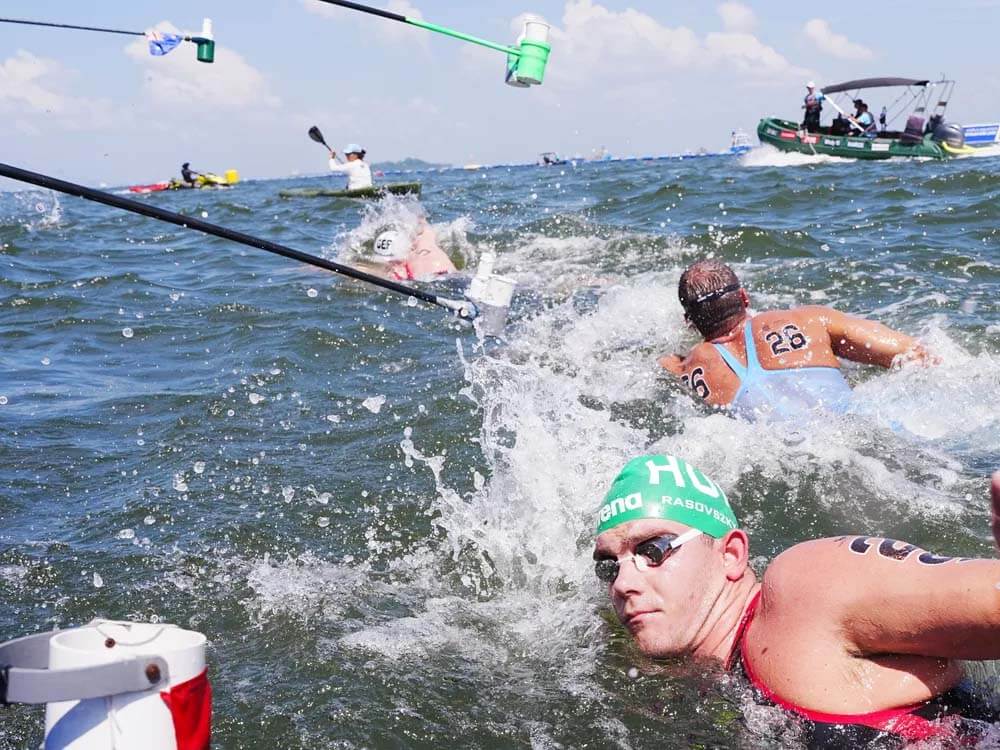

World Aquatics Launches Call to Research Open Water Heat Limits
World Aquatics on Tuesday released a call for updated research on heat limits for open water swim events.
The world governing body is launching a Request for Proposal (RFP) to commission research on “Safe Maximum Water Temperature Limits for Open Water Swimming Competitions.” In a press release, it is calling the initiative, “a proactive approach to athlete safety, noting that thermal stress in aquatic sports requires a specialised understanding, distinct from land-based endurance activities.”
The enumerated research goals are:
- How do water temperature, ambient conditions, and humidity collectively affect athlete safety and performance?
- Which physiological and demographic factors shape thermal tolerance in competitors?
- What evidence-based recommendations will support improved competition guidelines?
World Aquatics has opened a call for research applications, with a deadline of April 15. The link to submit is available here.
The current maximum water temperature for competitions is set at 31 degrees Celsius. It was set in 2013 after research conducted by the University of Otago in New Zealand on behalf of World Aquatics (then FINA), World Triathlon and the International Olympic Committee.
The primary impetus for standards was the death of Fran Crippen, an American athlete who died during a 2010 open water race in the United Arab Emirates. Crippen was 26. Several other athletes were treated for heat-related stress during and after the race in which Crippen died.
The world has changed noticeably in the last decade since those regulations, as anthropogenic climate change has increased the temperature of bodies of water at a rapid rate. Research could point to, for instance, a more optimal range for combined air and water temperature for a race that lessens risks for athletes given how quickly their bodies can disperse heat. World Triathlon, for instance, uses a table to modify swim distance based on water temperatures, per its 2025 regulations (page 42 of this pdf). The original swim distance of the race is maintained up to 30.9 degrees Celsius, then a maximum swim of 750 meters for 31.0-31.9 degrees Celsius water with anything warmer leading to cancellation.