





What It is Like to Be a USA Swimming Open Water Official
By Tom Lombardo and Mike Murphy
Becoming a USA Swimming open water official is a unique journey into a world where swimming meets adventure, unpredictability, and a deep commitment to athlete safety. Unlike pool swimming, open water events unfold in lakes, rivers, and oceans, presenting officials with challenges and rewards that are as varied as the environments themselves.
The Open Water Difference
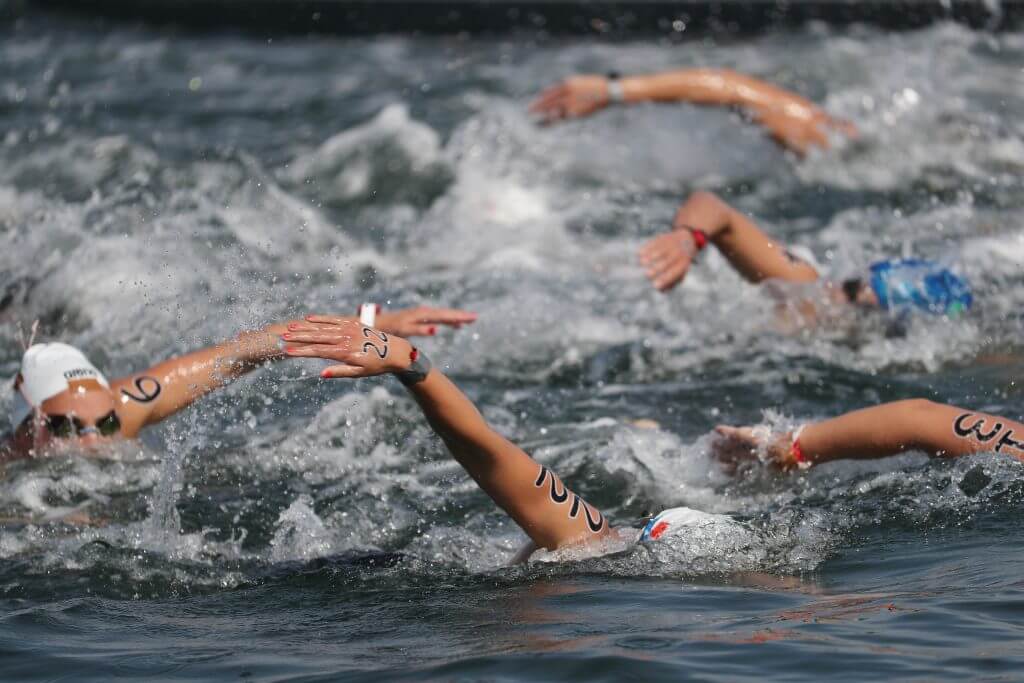
Pool swimming is defined by clear water, lane lines, walls, and a controlled climate. Each swimmer has their own lane, and the environment is predictable. In contrast, open water swimming can mean anything from crystal-clear lakes to murky rivers where visibility is minimal. There are no lane lines, swimmers race shoulder to shoulder, sometimes making contact, and they share the water with fish, dolphins, or even the occasional alligator. The course is marked by buoys, and swimmers must navigate, draft off one another, and adapt to changing weather and water conditions. Races can last over two hours, and for longer events, swimmers may “feed” mid-race, taking nutrition from coaches stationed on boats or docks.
Controlled Chaos and Preparation
Before the event, officials orchestrate controlled chaos: check-in, numbering, suit and fingernail checks, and feed pole inspections. Each official has a role, from safety officer to course judge, and some jobs require getting wet — whether riding in kayaks, peddle boats, or motorboats. Seasickness is a real possibility, and flexibility is essential. Officials must be ready for anything, from sudden weather changes to unexpected wildlife encounters.
Becoming an Open Water Official
Most OW officials start as pool officials. If you are a certified USA Swimming pool official in good standing, you can transition to open water by attending a clinic, passing the Open Water Judge Certification Exam, and apprenticing at events. The rules are fewer but crucial, focusing on safety, fairness, and the unique demands of open water. Essentials include weather-appropriate clothing, sun protection, binoculars, hand counters, dry bags, and snacks. Above all, a zeal for swimmer safety and adaptability is vital.
Personal Stories and Safety
Every official has stories — like navigating massive swells in Fort Lauderdale, spotting dolphins in Miami, or managing a feed station in Fort Myers in four-to-six-foot swells. These experiences highlight the camaraderie and unpredictability of open water officiating. But through it all, swimmer safety remains the top priority, from planning to race operations. Officials are the guardians of fair play and safety, ensuring every athlete can compete at their best in the open water.
In summary, being a USA Swimming open water official means embracing adventure, maintaining vigilance, and upholding the highest standards of safety and fairness. It is a role for those who love swimming, thrive in dynamic environments, and want to make a meaningful impact on the sport.