




Editorial content is sponsored by TritonWear. Visit TritonWear.com

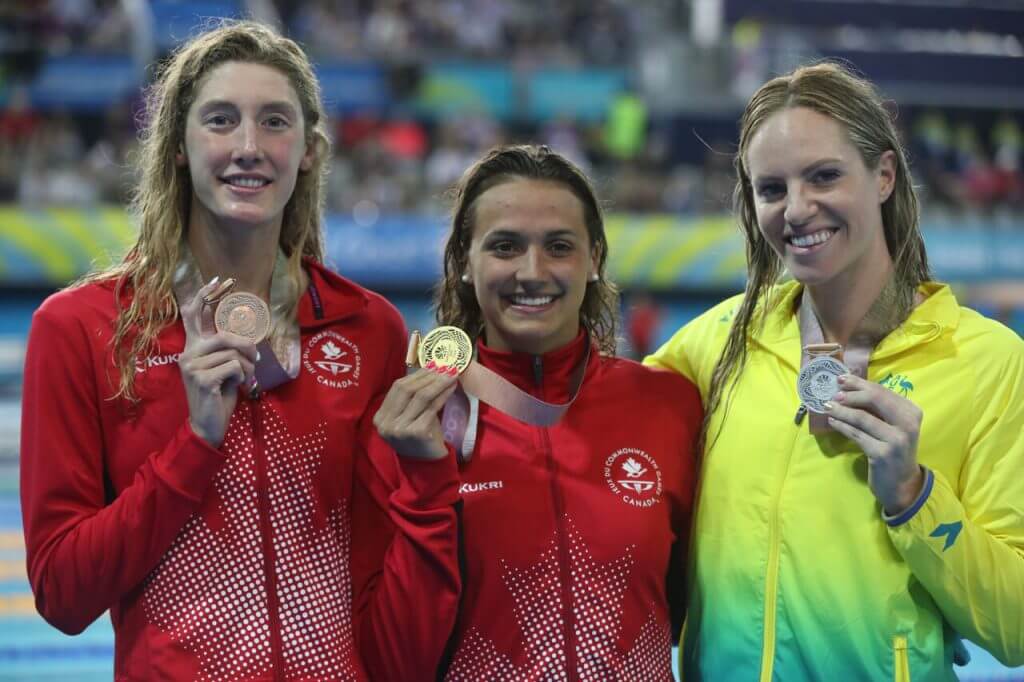
The TritonWear Race Analysis for the women’s 100m backstroke featured a thrilling event, right from the prelims. Australia’s defending champion Emily Seebohm broke her own record by almost half a second before Canada’s Kylie Masse lowered the record time even further in the next heat. Their race in the final did not disappoint; Seebohm’s time matched Masse’s earlier record, but Masse finished 0.03 seconds faster, breaking the record twice in one day.
It was an extremely tight race between Masse and Seebohm from the start. Seebohm took an early lead with her powerful underwater kicks, breaking out slightly ahead of Masse.
They both swam at the same speed, but had different stroking metrics (DPS, stroke rate, stroke index).
On the first 50m, Masse was pulling faster but less efficient strokes, producing low DPS at a faster rate. Conversely, Seebohm was taking longer and more efficient strokes but took more time with each stroke. Their opposite strategies had them right beside one another through the lap, but Seebohm’s faster turn gave her an added advantage that put her three hundredths of a second ahead off the wall.
The second lap had an interesting turn of events. Masse and Seebohm were still neck-and-neck but both reversed their stroking strategy. Masse slowed down her strokes significantly and pulled at a slower rate than Seebohm, but supplemented this with an increase in her DPS. Meanwhile, Seebohm slightly increased her stroke rate, but had a large drop in DPS, registering a lower DPS and stroke index than Masse. The loss of stroke efficiency was evident in her increased stroke count, going up from 32 strokes on the first half to 40 coming back.
Key Takeaways
This race demonstrates the importance of maximizing DPS and stroke efficiency, especially in sprint events where each stroke can determine the outcome of the race. They employed opposite strategies, but between Masse and Seebohm, it was the athlete who produced more efficient strokes and gained more distance with each stroke that clocked in the faster split in either lap.

Andy Landy
Wow – keeping this