




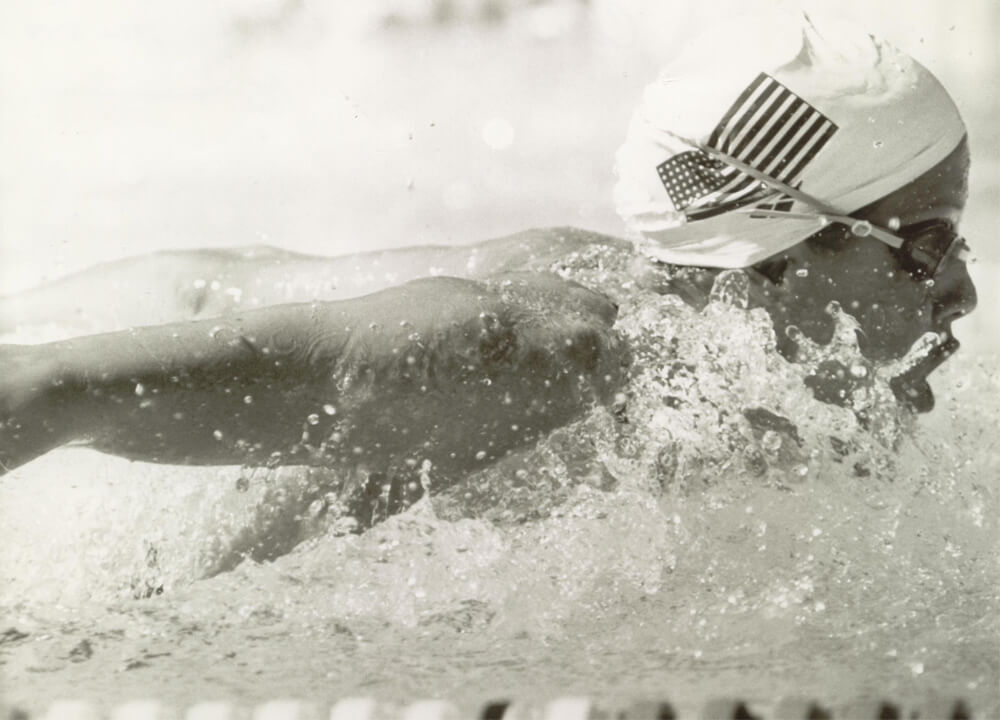















Takeoff to Tokyo: The US Boycott of the 1980 Moscow Olympics
By John Lohn
Years of hard work went unfulfilled. Dreams turned into nightmares. Sadness and anger abounded. The repercussions of the United States’ decision to boycott the 1980 Olympic Games in Moscow were severe. This summer marks the 40th anniversary of a toxic mix of sports and politics.
There was no proper reaction to the official announcement. The athletes, as was their right, reacted differently, and in fashions that were personally appropriate. Some immediately let the tears flow. Several instantly harbored intense anger. Others sat in disbelief, wondering how such a decision could be made.
An adage that sports and politics do not mix has been uttered for years. Fans want their athletes to play. They want touchdowns. They want goals. They want baskets. More, citizens don’t need their elected officials to infuse government policy into the games they follow. Yet, when President Jimmy Carter announced on March 21, 1980 that the United States would not send a delegation to that summer’s Olympics in Moscow—instead choosing to boycott the Games—sports and politics were puréed in the same blender.
Upon the Soviet Union’s invasion of Afghanistan in December 1979, Cold War tensions between the USSR and the United States sizzled. For Carter, the invasion was an unacceptable overstep of force by the Soviets, and a move that called for a strong response. With Moscow set to be the focal point of the athletic world in the summer of 1980, Carter felt an American presence would legitimize the Soviet government and its actions. The consequence was an American boycott of the Olympic Games.
“It is absolutely imperative that we and other nations who believe in freedom and who believe in human rights and who believe in peace let our voices be heard in an absolutely clear way, and not add the imprimatur of approval to the Soviet Union and its government while they have 105,000 heavily armed invading forces in the freedom-loving and innocent and deeply religious country of Afghanistan,” Carter said.
In its decision to refrain from competing in the 22nd Olympiad, the United States was joined by more than 60 other nations. Still, what may have been deemed as the politically correct move left thousands of athletes—from swimming, track and field, gymnastics and beyond—emotionally crippled. While Carter may be known for his generosity wielding a hammer on behalf of Habitat for Humanity during his post-Oval Office days, the former president also used that tool—in a figurative sense—on athletes’ dreams.
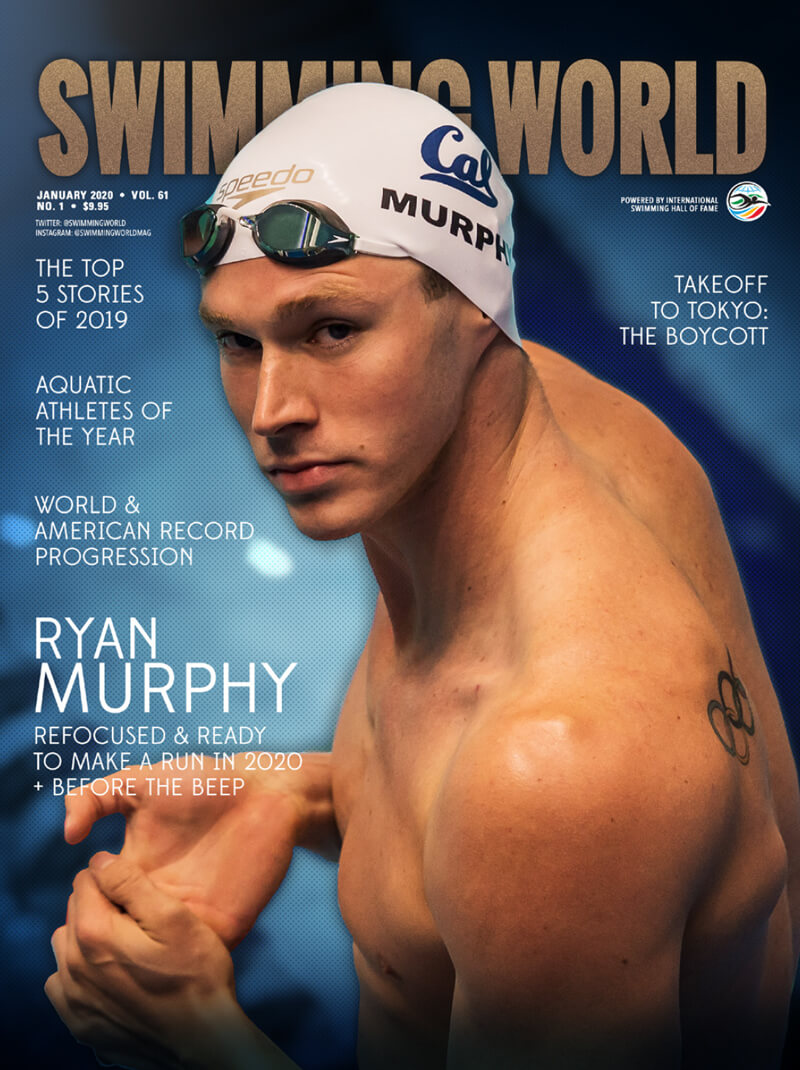
To read more about the far-reaching consequences of the US Boycott of the 1980 Olympic Games,
Check out the January issue of Swimming World Magazine, available now!
Get Swimming World Magazine and Swimming World Biweekly FREE When You
Become A Member of the International Swimming Hall of Fame
Want More? Subscribe With This Special 2-Year Offer!
New! 1-Year Digital Only Subscription for just $39.95 Order Now!
Non-Subscribers Can Download This Issue For Only $5.94
FEATURES
016 THE TOP 5 STORIES OF 2019
by Dan D’Addona
From the debut of the International Swimming League to a worldwide youth movement, 2019 marked the start of a new era in swimming.
018 2019 ATHLETES OF THE YEAR
by Shoshanna Rutemiller, Dan D’Addona and Michael Randazzo
Diving: Shi Tingmao & Xie Siyi
Artistic: Svetlana Romashina & Svetlana Kolesnichenko
Water Polo: Ashleigh Johnson & Francesco Di Fulvio
Disabled: Sophie Pascoe & Reece Dunn
020 EVENT SPECIALIZATION…WHEN?
by Michael J. Stott
Many coaches are postponing specialization in favor of creating well-rounded swimmers for what lies ahead, leaving preordination behind so that other coaches, human nature and physical development can take its course.
022 READY AND REFOCUSED
by David Rieder
At last year’s World Championships in Gwangju, Ryan Murphy came home with three silver medals, but his first individual long course World title still eluded him. With his focus now set on the 2020 Olympic summer, the 100 back world record holder and 2016 triple Olympic gold medalist is looking ahead to Tokyo with confidence.
026 TAKEOFF TO TOKYO: THE BOYCOTT
by John Lohn
Years of hard work went unfulfilled. Dreams turned into nightmares. Sadness and anger abounded. The repercussions of the United States’ decision to boycott the 1980 Olympic Games in Moscow were severe. This summer marks the 40th anniversary of a toxic mix of sports and politics.
030 2019 WORLD & AMERICAN RECORD PROGRESSION
by Taylor Brien
032 ISHOF: SETTING THE RECORD STRAIGHT
by Bruce Wigo
Dr. Kevin Dawson, who recently received the Harriet Tubman Prize for his book, Undercurrents of Power: Aquatic Culture in the African Diaspora, corrects and revises the history of swimming to include and recognize the contributions and accomplishments of Africans to aquatics.
036 MENTAL PREP: BEFORE THE BEEP WITH RYAN MURPHY
by Shoshanna Rutemiller
COACHING
010 LESSONS WITH THE LEGENDS: RAY DAUGHTERS
by Michael J. Stott
014 SWIMMING TECHNIQUE CONCEPTS: STRATEGIES TO ACCELERATE SKILL LEARNING
by Rod Havriluk
There are many different skill-learning approaches that can help a competitive swimmer improve his/her technique. For example, competitive swimming strokes “can be taught in their entirety or broken down into parts.” While both the “whole” and “part” approaches can help swimmers progress in all four strokes, selecting the most appropriate method can accelerate skill learning.
042 SPECIAL SETS: GETTING READY TO RACE
by Michael J. Stott
As college swimming rolls into its championship season in February and March, meet warm-ups take on even greater importance.
044 Q&A WITH COACH WENBO CHEN
by Michael J. Stott
045 HOW THEY TRAIN SARAH BACON
by Michael J. Stott
TRAINING
013 DRYSIDE TRAINING: TIME TO RESET—READY, SET GO!
by J.R. Rosania
JUNIOR SWIMMER
047 UP & COMERS: RYAN HOGAN
by Shoshanna Rutemiller
COLUMNS
008 A VOICE FOR THE SPORT
009 BEYOND THE YARDS
025 THE OFFICIAL WORD
035 GUTTERTALK
048 PARTING SHOT