




Editorial content for the 2021 Tokyo Olympic Games coverage is sponsored by GMX7.
See full event coverage. Follow GMX7 on Instagram at @GMX7training #gmx7

Record-Book Assault: Men’s World Marks in Danger at the Tokyo Olympics
In the women’s competition at the Tokyo Olympics, a handful of world records could be broken, but there are no records that are guaranteed to be gone. In the men’s events, however, expect to see a massive rewriting of the record books.
While most women’s events feature the current world-record holder, just five men’s events will boast history’s top performer. However, the men’s meet will feature three of swimming’s established stars, all considered heavy favorites for gold medals, all who have been pointing toward a peak at these Games, and that could bring about historic performances on a near-daily basis. It would not be at all surprising for six or maybe more world records to go down.
Here’s the records we should be on watch for.
100 Breaststroke: This one is all about Adam Peaty. He has already been a 56 (at the 2019 World Championships), and after winning Olympic gold in 2016 and three straight world titles (the last two in utterly dominant fashion), he is an established big race performer. The world has closed the gap slightly on Peaty as Arno Kamminga became the second man to swim a 57-second 100 breast earlier this year, and swimmers like Michael Andrew and Nicolo Martinenghi are on the verge of such efforts, but look for Peaty to deliver another masterful, signature performance under his current world record of 56.88
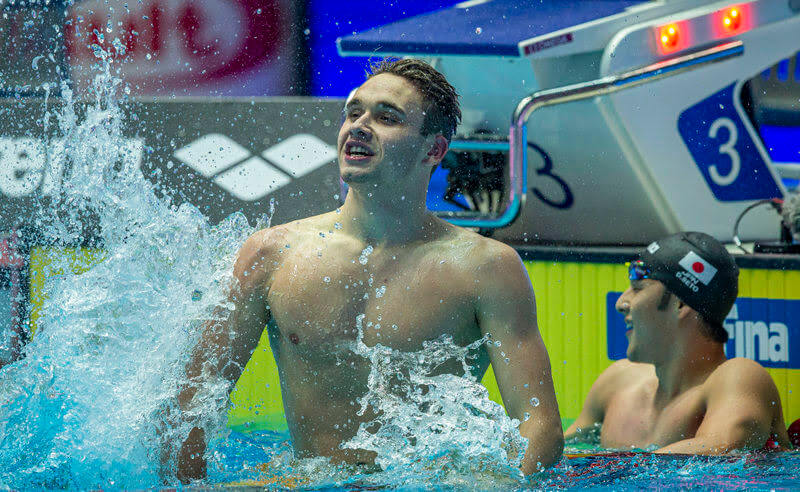
200 Butterfly: Two years after Kristof Milak posted the swim of a lifetime by breaking Michael Phelps’ 200 fly world record at the World Championships, Milak has already surpassed Phelps’ previous mark twice this year. His record is 1:50.73, and he swam a 1:51.40 in March followed by a 1:51.10 in May. This is insane to consider, but we could be talking about a 1:49 performance in Tokyo if all the cards fall perfectly. No question Milak is lowering that record again.
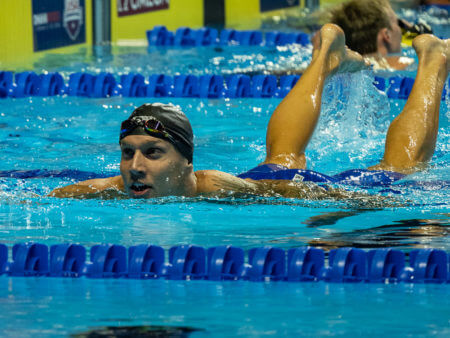
Caeleb Dressel at U.S. Olympic Trials — Photo Courtesy: Peter H. Bick
100 Butterfly: Caeleb Dressel put a scare into his own 100 fly world record (49.50) at Olympic Trials, and that meet was clearly a preview of the performance he will put on in Tokyo. The Games are set to be a showcase event for him with the world watching, and the 100 fly will be an opportunity for him to lower the only long course world record he already owns. Milak should be able to push Dressel and get down under 50 seconds as well, but Dressel should be a 49-low.
50 & 100 Freestyle: The world records in this event are from the supersuit era of 2009, 20.91 in the 50 free and 46.91 in the 100 free, both held by Brazil’s Cesar Cielo. Dressel has been inching closer to these marks for years. He swam a 46.96 to win the 100 free at the 2019 World Championships, just 0.05 off Cielo’s record, and he swam a 21.04 50 free at both the 2019 Worlds and at Olympic Trials last month. Dressel breaking these long-standing records looks like an inevitability, and even though Dressel’s competition in the 100 free looks strong, the Tokyo Olympics are a perfect opportunity.
200 Breaststroke: The last race where it’s really hard to not see the world record going down is the men’s 200 breast, where Australia’s Zac Stubblety-Cook (2:06.28) and Japan’s Shoma Sato (2:06.40) have both barely missed Anton Chupkov’s world record of 2:06.12 already this year. Russia’s Chupkov is the two-time defending world champion in the 200 breast, and he possesses the best finishing speed ever seen in a breaststroke race, but he will have his hands full as three men push each other to new heights. While a 2:06 had never been touched at the time of the last Olympics, it could take a 2:05 to win gold.
100 Backstroke: This event does not fall into the “yes, absolutely” category of world records in danger at the Olympics, but it’s certainly a possibility. The Rio Olympics were the site of Ryan Murphy’s current 100 back world record, a 51.85 set leading off the U.S. men’s 400 medley relay, and Murphy looked strong at U.S. Olympic Trials. Russians Kliment Kolesnikov and Evgeny Rylov have pushed the 52-second barrier this year, and China’s Xu Jiayu is the two-time defending world champion and second-fastest performer ever. This group could push themselves to a new world record.
200 Individual Medley: Twice at U.S. Olympic Trials, Michael Andrew was more than a second under world-record pace at the 150-meter mark of his 200 IM, only to fade badly down the stretch on the freestyle leg. His best time is 1:55.26, more than a second off Ryan Lochte’s world record of 1:54.00. That mark is probably safe in Tokyo, but if Andrew figures out how to finish while holding his early speed, the record is toast.
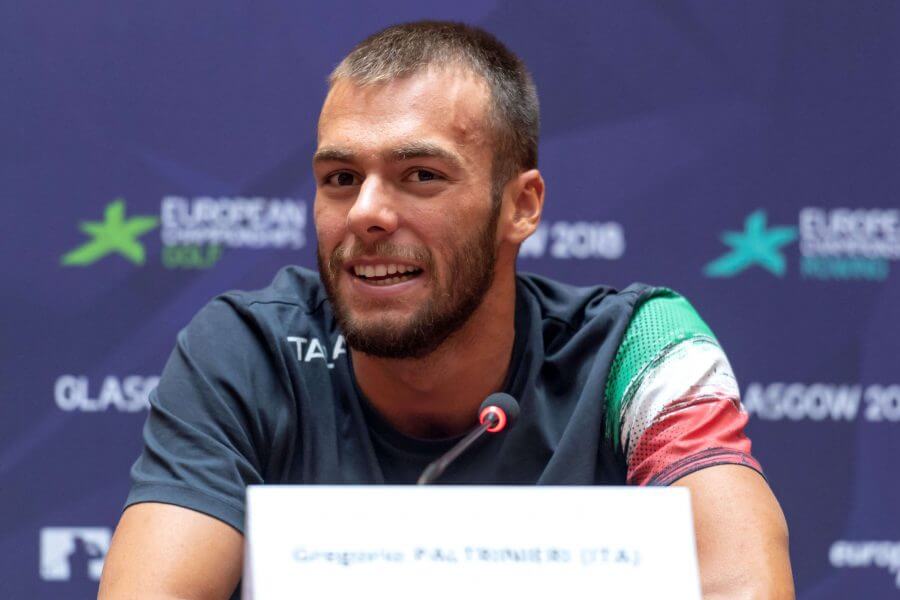
Gregorio Paltrinieri — Photo Courtesy: Deepbluemedia/Andrea Staccioli
1500 Freestyle: Probably another longshot, but defending Olympic gold medalist Gregorio Paltrinieri swam the second-fastest time in history in 2020. Paltrinieri, Florian Wellbrock and Mykhailo Romanchuk have pushed each other to some very swift mile times over the past three years, and while Paltrinieri has battled mononucleosis recently, maybe one out of this trio can drop the hammer and make a run at Sun Yang’s world record of 14:31.02 from the London Olympics.
The rest: That was nine out of 14 individual men’s events with at least an outside chance at a world record, and records are probable in six of those. The remaining five events? Highly unlikely. No one has come within two seconds of Phelps’ legendary 400 IM world record of 4:03.84 in nine years, and the four other records that remain from the infamous 2009 super-suit era have never been scared. That list includes two Paul Biedermann records (1:42.00 in the 200 free and 3:40.07 in the 400 free), Zhang Lin’s stunning 7:32.12 in the 800 free and Aaron Peirsol’s 1:51.92 in the 200 back.
However many there are, there
would have been more if not for morning
finals!
wrong