



















Earning Your Ducks: A Summer Coach’s Playbook for Teaching Young Swimmers a Positive Mindset
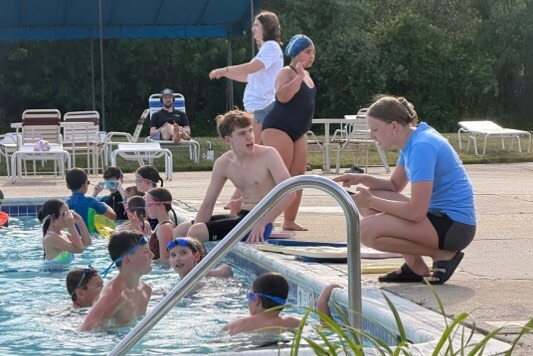
Standing in the ice-cold water and ready to coach, I am watching kids splash and laugh around me. It’s practice before a big home meet. The coaches want swimmers focused on the strokes they are going to race. We separate the kids into lanes by stroke. I take the breaststroke lane, where I start working on streamlines, gliding, and keeping the swimmer’s strokes legal so no one gets disqualified.
Focusing on each swimmer, I make sure everyone understands what to do. While coaching, I start to notice that one boy is struggling. His legs aren’t coming together, and his timing is off. I stop him, walk him through the stroke, and he tries again. Barely any change. We repeat the cycle. I explain, and he tries again. Nothing improves. I start running out of ideas and become a little frustrated. I expect him to get discouraged and just swim it his own way. Instead, he keeps on trying. Every time he asks if it’s getting any better, he does so with a smile. He stays positive through the whole practice, tells me what he wants to work on next, and keeps asking questions about his stroke. I was genuinely surprised. In a practice where I was close to giving up, this kid used the exact mindset we’d been coaching all season, without even realizing it.
This summer was my first-year coaching Stingrays, a recreational summer swim team that I’ve been part of my whole life. This team is the reason I fell in love with swimming in the first place. Having been a competitive swimmer, both on a club team and my high school’s varsity team, I know firsthand how physically, and mentally challenging swimming can be. It’s a sport that demands a strong mindset, something I’ve been working on myself, especially this year.
I participated in a mindset course that was offered by my high school. It taught me how to eliminate negative self-talk, create achievable goals, how to bounce back from tough races, and so much more. This course improved the way I swam tremendously. So going into the season, I knew I wanted to include these lessons as I coached these young swimmers who range from ages 6 to 10. Drawing from the lessons I learned, I developed a mindset routine that included positive reinforcement and three simple mindset principles: Goal Setting; Positive Self-Talk; and Reflect and Reset.
I wondered if children as young as six could understand mindset concepts like these? Would these skills stick? Can positive reinforcement help get the children to practice these skills on their own?
I figured if I could teach them this mindset early, it’s something they could carry with them, not just with swimming but any sport that they do. My program ran for seven active weeks, with swimmers attending practice an average of three to four days per week. Throughout the season, I observed the swimmers and awarded stickers and the item coveted by so many swimmers, a rubber duck when they demonstrated these skills. To track this, I created a tabbed binder organized by week, with an individual page for each swimmer. Each page followed their progress. My fellow coaches and I were always listening for swimmers who were sharing a goal, making a positive statement about their races, showing resilience by bouncing back after a tough practice or race, seeking feedback, or identifying ways they wanted to improve.
At the end of the season, I tallied stickers and the results spoke for themselves. Over the course of seven weeks, this mindset skills program with positive reinforcement successfully engaged almost half of the swimmers. Once a swimmer participated in one skill, nearly half used a second skill. It was also clear that Positive Self-Talk was the skill that resonated with the children the most. Swimmers earned 68% of the stickers for Positive Self-Talk. Swimmers earned more and more stickers each week and most of the ducks were awarded closer to the end of the season. This shows that the swimmers were using the skills more and more.
It was rewarding to me as a coach to see the program start to work. I saw swimmers who started coming up to me saying something as simple as, “I want to go faster in freestyle today” or “I did it,” with huge smiles on their faces. I watched swimmers start running up to me after races carrying their ribbons they just earned, excited to show them off. More swimmers cheered for teammates, giving others even more confidence. They started to focus less on the bad races and more on the races they actually did very well in. I saw these kids as young as six and seven years old start to master a positive mindset without even realizing it.
The stickers and ducks are a small example of how coaches can positively impact swimmers’ confidence, no matter their age. Swimmers as young as six or seven years old had the highest amount of participation in the mindsets. Showing that the belief of mindset lessons only working for older athletes can cause young swimmers to miss out on important lessons. Introducing this mindset early, before negative self-talk and frustration take over, may help swimmers build resilience as a habit they use early rather than a skill they have to learn later on. All coaches are looking for ways to help young athletes deal with frustration and disappointment. This shows that a simple and cheap reward system can be enough to get young athletes to start noticing and practicing these skills on their own.
As a new coach, I learned something, too. This mindset program held me accountable for teaching the younger swimmers these important skills. Each practice, I showed up with intention. I became a coach who took pride in knowing that I was helping shape the way the swimmers were thinking, not just how fast they were swimming.
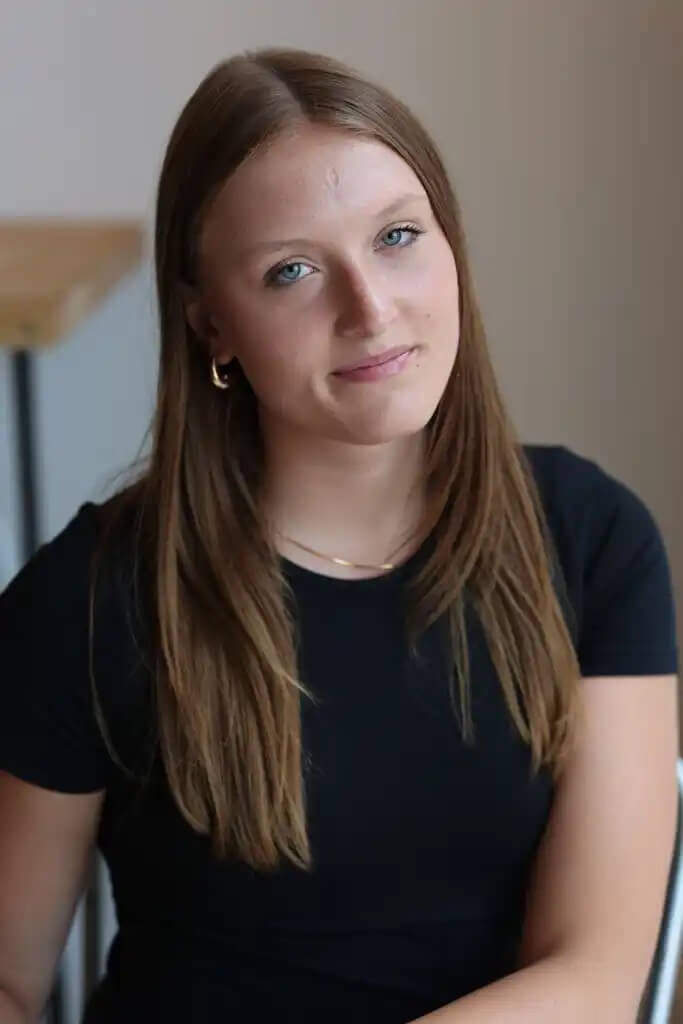 Riley Pulaski swims for The Hun School of Princeton and Peddie Aquatic Association, holding NJS Silvers standards in the 1000 and 1650 freestyle and has competed at NJS Silver and Gold Championship meets. She coaches for the Monmouth Heights Stingrays and hopes to study psychology and work with children. Outside the pool, Riley does theater and helps run For the Love of Recess, a nonprofit providing recess equipment to kids in need.