






Commentary
As “TV doctors” in the United States come under fire for their use of statistics in the debate over what next in the coronavirus pandemic, one man’s mistake is an opportunity to remind ourselves of the importance of drowning prevention, the facts and figures and where to go to find them
Drowning found itself at the heart of the coronavirus debate this week after Phil “Dr. Phil” McGraw, an American television personality and former psychologist who host an eponymous TV show, said there were 360,000 annual deaths in pools in the United States.
He later apologised, saying he “misspoke” and was quoting annual worldwide drowning figures.
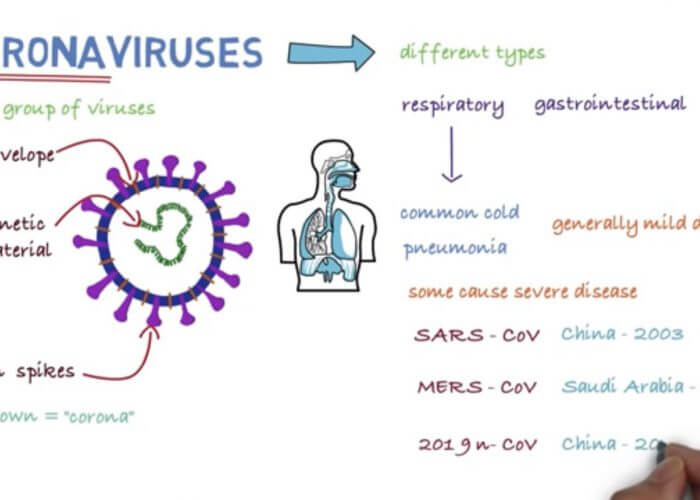
The ‘novel coronavirus 2019- CoV’ explained by the World Health Organisation – Photo Courtesy: WHO, YouTube
In 2017, official figures placed U.S. deaths from accidental drowning or submersion at 3,709. That statistic includes tragedies in water beyond pools.
Dr Phil was roundly criticised not so much for making the significant mistake he made on the numbers but because he used the figure when discussing the impact and mortality rate – now topping 37, 000 in in the U.S. – from the novel coronavirus (COVID-19).
The criticism, which included the fact that drowning is neither infectious nor contagious, while deaths by drowning are spread across whole years and do not runs to the tens of thousands in a matter of a few weeks, rippled from medical experts to media.
Arthur Caplan, the founding head of the division of medical ethics at the New York University School of Medicine, called comparison between coronavirus COVID-19 and other more common causes of death “ridiculous, ill-grounded, and actually dangerous”. Caplan added:
“The issue isn’t how many people die of car crashes or swimming pool accidents or strokes or whatever. The question is whether they all happen at once and overwhelm the health care system.”
The controversy was covered by CNN among other networks in the United States, including ‘TV doctors” being pulled up by Dr. Anthony Fauci, director of the National Institute of Allergy and Infectious Diseases.
The story rippled far out from the U.S. The Guardian in the United Kingdom, as well as many other European media outlets also picked up the story. The Guardian article runs under the headline “No match for Dr Fauci – are TV Doctors like Dr Phil causing more harm than good?”
Dr Phil was advocating reopening the economy and made his statistical error in the midst of rattling off a string of statistics about other causes of death that are not accompanied by lockdowns and shelter-in-place orders. McGraw told Fox News host Laura Ingraham:
“The fact of the matter is, we have people dying – 45,000 people a year die from automobile accidents, 480,000 from cigarettes, 360,000 a year from swimming pools.”
McGraw later acknowledged that he had offered “bad examples”.
Drowning Prevention – Awereness, facts and figures

Photo Courtesy: American Red Cross
In terms of drowning, here are the facts we know according to the official figures from organisations including The American Red Cross and, on a Global; level, the World Health Organisation (WHO):
- Ten people die each day from unintentional drowning, and on average 2 of them are under age 14.
- Drowning is responsible for more deaths among children ages one to four than any other cause except birth defects.
- Among those 1-14, drowning is the second-leading cause of unintentional injury-related death behind motor vehicle crashes.
- For every child who dies from drowning, another five receive emergency care for nonfatal submersion injuries.
Some English-language sources of information on DROWNING PREVENTION
Australia
Fiji/Australia
UK
USA
- The National Drowning Prevention Alliance (NDPA)
- Due to the coronavirus pandemic, the National Drowning Prevention Alliance (NDPA) held its annual conference on line from April 6-9 this year under the banner “Drowning Won’t Stop, So Neither Will We!“
- Make A Splash at the USA Swimming Foundation
- American Academy of Paediatrics
- The American Red Cross
- Centers for Disease Control and Prevention
The World Health Organisation
Key facts
- Drowning is the 3rd leading cause of unintentional injury death worldwide, accounting for 7% of all injury-related deaths.
- There are an estimated 320 000 annual drowning deaths worldwide.
- Global estimates may significantly underestimate the actual public health problem related to drowning.
- Children, males and individuals with increased access to water are most at risk of drowning.
Scope of the problem
In 2016, an estimated 320 000 people died from drowning, making drowning a major public health problem worldwide. In 2015, injuries accounted for over 9% of total global mortality. Drowning is the 3rd leading cause of unintentional injury death, accounting for 7% of all injury-related deaths.
The global burden and death from drowning is found in all economies and regions, however:
- low- and middle-income countries account for over 90% of unintentional drowning deaths;
- over half of the world’s drowning occurs in the WHO Western Pacific Region and WHO South-East Asia Region;
- drowning death rates are highest in the WHO African Region, and are 15-20 times higher than those seen in Germany or the United Kingdom, respectively.
Despite limited data, several studies reveal information on the cost impact of drowning. In the United States of America, 45% of drowning deaths are among the most economically active segment of the population. Coastal drowning in the United States alone accounts for US$ 273 million each year in direct and indirect costs. In Australia and Canada, the total annual cost of drowning injury is US$ 85.5 million and US$ 173 million respectively.
There is a wide range of uncertainty around the estimate of global drowning deaths. Official data categorization methods for drowning exclude intentional drowning deaths (suicide or homicide) and drowning deaths caused by flood disasters and water transport incidents.
Data from high-income countries suggest these categorization methods result in significant underrepresentation of the full drowning toll by up to 50% in some high-income countries. Non-fatal drowning statistics in many countries are not readily available or are unreliable.
Risk factors
Age
The Global report on drowning (2014) shows that age is one of the major risk factors for drowning. This relationship is often associated with a lapse in supervision. Globally, the highest drowning rates are among children 1–4 years, followed by children 5–9 years. In the WHO Western Pacific Region children aged 5–14 years die more frequently from drowning than any other cause.
Child drowning statistics from a number of countries presented in the Global Report on Drowningare particularly revealing:
- Drowning is one of the top 5 causes of death for people aged 1–14 years for 48 of 85 countries with data meeting inclusion criteria.
- Australia: drowning is the leading cause of unintentional injury death in children aged 1–3 years.
- Bangladesh: drowning accounts for 43% of all deaths in children aged 1–4 years.
- China: drowning is the leading cause of injury death in children aged 1–14 years.
- United States of America: drowning is the second leading cause of unintentional injury death in children aged 1–14 years.
Gender
Males are especially at risk of drowning, with twice the overall mortality rate of females. They are more likely to be hospitalized than females for non-fatal drowning. Studies suggest that the higher drowning rates among males are due to increased exposure to water and riskier behaviour such as swimming alone, drinking alcohol before swimming alone and boating.
Access to water
Increased access to water is another risk factor for drowning. Individuals with occupations such as commercial fishing or fishing for subsistence, using small boats in low-income countries are more prone to drowning. Children who live near open water sources, such as ditches, ponds, irrigation channels, or pools are especially at risk.
Flood disasters
Drowning accounts for 75% of deaths in flood disasters. Flood disasters are becoming more frequent and this trend is expected to continue. Drowning risks increase with floods particularly in low- and middle-income countries where people live in flood prone areas and the ability to warn, evacuate, or protect communities from floods is weak or only just developing.
Travelling on water
Daily commuting and journeys made by migrants or asylum seekers often take place on overcrowded, unsafe vessels lacking safety equipment or are operated by personnel untrained in dealing with transport incidents or navigation. Personnel under the influence of alcohol or drugs are also a risk.
Other risk factors
There are other factors that are associated with an increased risk of drowning, such as:
- lower socioeconomic status, being a member of an ethnic minority, lack of higher education, and rural populations all tend to be associated, although this association can vary across countries;
- infants left unsupervised or alone with another child around water;
- alcohol use, near or in the water;
- medical conditions, such as epilepsy;
- tourists unfamiliar with local water risks and features;
Prevention
There are many actions to prevent drowning. Installing barriers (e.g. covering wells, using doorway barriers and playpens, fencing swimming pools etc.) to control access to water hazards, or removing water hazards entirely greatly reduces water hazard exposure and risk.
Community-based, supervised child care for pre-school children can reduce drowning risk and has other proven health benefits. Teaching school-age children basic swimming, water safety and safe rescue skills is another approach. But these efforts must be undertaken with an emphasis on safety, and an overall risk management that includes a safety-tested curricula, a safe training area, screening and student selection, and student-instructor ratios established for safety.
Effective policies and legislation are also important for drowning prevention. Setting and enforcing safe boating, shipping and ferry regulations is an important part of improving safety on the water and preventing drowning. Building resilience to flooding and managing flood risks through better disaster preparedness planning, land use planning, and early warning systems can prevent drowning during flood disasters.
Developing a national water safety strategy can raise awareness of safety around water, build consensus around solutions, provide strategic direction and a framework to guide multisectoral action and allow for monitoring and evaluation of efforts.
WHO response
WHO released the Global report on drowning in November 2014. This was the first time WHO had developed a report dedicated exclusively to drowning. The report pointed out that drowning has been highly overlooked to date, and that a great deal more should be done by governments and the research and policy communities to prioritize drowning prevention and its integration with other public health agendas.
The Global report on drowning provides recommendations to governments to tailor and implement effective drowning prevention programmes to their settings, improve data about drowning, and develop national water safety plans. The report also points out the multi-sectoral nature of drowning and calls for greater coordination and collaboration among UN agencies, governments, key NGOs and academic institutions to prevent drowning.
In May 2017, WHO released Preventing drowning: an implementation guide. This publication builds on the Global report on drowning and provides concrete guidance for drowning prevention practitioners on how to implement drowning prevention interventions.
At country level, WHO has worked with Ministries of Health in some low- and middle-income countries to prevent drowning through the use of barriers controlling access to water and the establishment of day care centres for pre-school children. In addition, WHO has also funded research in low-income countries exploring priority questions related to drowning prevention. At a regional level, WHO organizes training programmes and convenes workshops to draw together representatives of governments, NGOs and UN agencies working on drowning prevention.
- All commentaries are the opinion of the author(s) and do not necessarily reflect the views of Swimming World Magazine, the International Swimming Hall of Fame, nor its staff.