





By Annie Grevers, Swimming World Staff Writer
Protein. Athletes need protein. Protein is….meat. Right? That’s how we are conditioned to think. Without meat, swimmers have no energy, no body mass, no fast twitch. Is all of this true?
After watching the critically-acclaimed “Forks Over Knives” documentary this spring, Matt Grevers and I became curious. One man with over 50 ailments was healed by simply switching over to a plant-based diet. I watched as a group of patients in the documentary ate their prescribed vegetarian cuisine, and I was not drooling over their portobello burgers and tofu.
The Western diet makes it feel like a sin to exclude meat from your dinner plate– especially if you’re a swimmer! Neither of us suffered the same illnesses of the featured patient, but we began to think…if things that grow in dirt can bring about seemingly miraculous recoveries, how could it be a bad thing for athletes to utilize to aid recovery?
Yes, you’re right, it’s a different type of recovery. We need to rebuild muscle after tearing it down, not just cut down on our high fructose corn syrup intake. After watching a few other documentaries and reading up on vegetarianism, we decided to give produce a try. It was an experiment. I cut out meat entirely and Matt had it sporadically in the form of turkey sandwiches. But all of our dinners were missing that savory mass of meat.
One week passed. We felt fine. Two weeks. Still good. Three weeks. I didn’t even crave meat. It was bizarre.
During our (almost) meatless summer, we learned a few things:
1. Protein is not synonymous with meat.
Here are a few foods which are not meat, but are packed with protein: beans, broccoli, watercress, tofu, seitan, tempeh, spinach, chard, eggs, spinach, oat bran, nuts (almonds, cashews, pistachios, walnuts), nut butters (hallelujah!), quinoa, lentils, seeds, asparagus, millet, buckwheat, and so many more!
2. Vegetables, even the seemingly nasty ones, can be made to taste good.
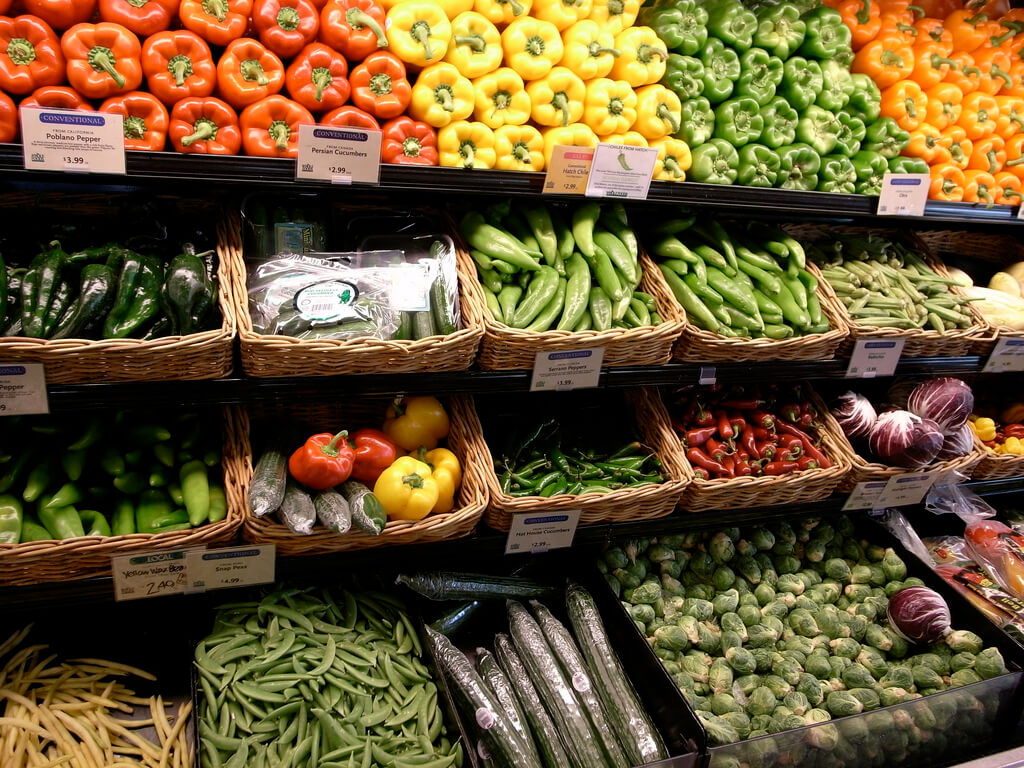
Photo Courtesy: Masahiro Ihara
Deep purple eggplants always looked so dark and daunting to me, but my favorite meatless meal of the summer was a pile of eggplant medallions smothered in a miso glaze. Another “scary” vegetable I now love is spaghetti squash. It just takes some effort to learn how to bust them open, but YouTube is a ready assistant. The world has discovered the wonder of sweet potato fries. SO good. Okinawans discovered the perfection of the sweet potato long before we came to know the goodness of sweet potato fries (see #3).
There are so many mysterious-looking vegetables to Google and learn how to make delicious. Many areas have produce delivery services, where boxes of in-season produce from local farms will be delivered each week, directly to your door step! Very convenient for the exhausted swimmer.
3. Research says plants make you live longer.
In Dan Buettner‘s book The Blue Zones Solutions, he delves into areas containing the world’s longest living populations (called the Blue Zones) and finds out their secrets to longevity.
According to Buettner:
“There’s no one food that is going to assure you’ll live longer or healthier; it’s about the combination. In the Blue Zone of Costa Rica, we found almost the perfect food combination in corn, beans and squash—these three provide all the proteins necessary for life. In Okinawa, sweet potatoes—high in beta-carotene—fueled centenarians for nearly half of their lives. And in Sardinia, a sourdough bread, leavened with lactobacillus, actually lowers insulin response to a meal.”
His book is fascinating, if you’re looking for an enlightening read. Oh, and a centenarian is someone who has lived to be 100 or older.
4. Tofurkey is not the wurst (get it?).
One of our favorite meals over the summer was sliced tofurkey sausage in a veggie stir fry. It might taste a tad sponge-like at first, but Matt and I both grew to love the flavor…I know. I cannot believe I just typed that either.
5. But athletes need more than vegetables, right?
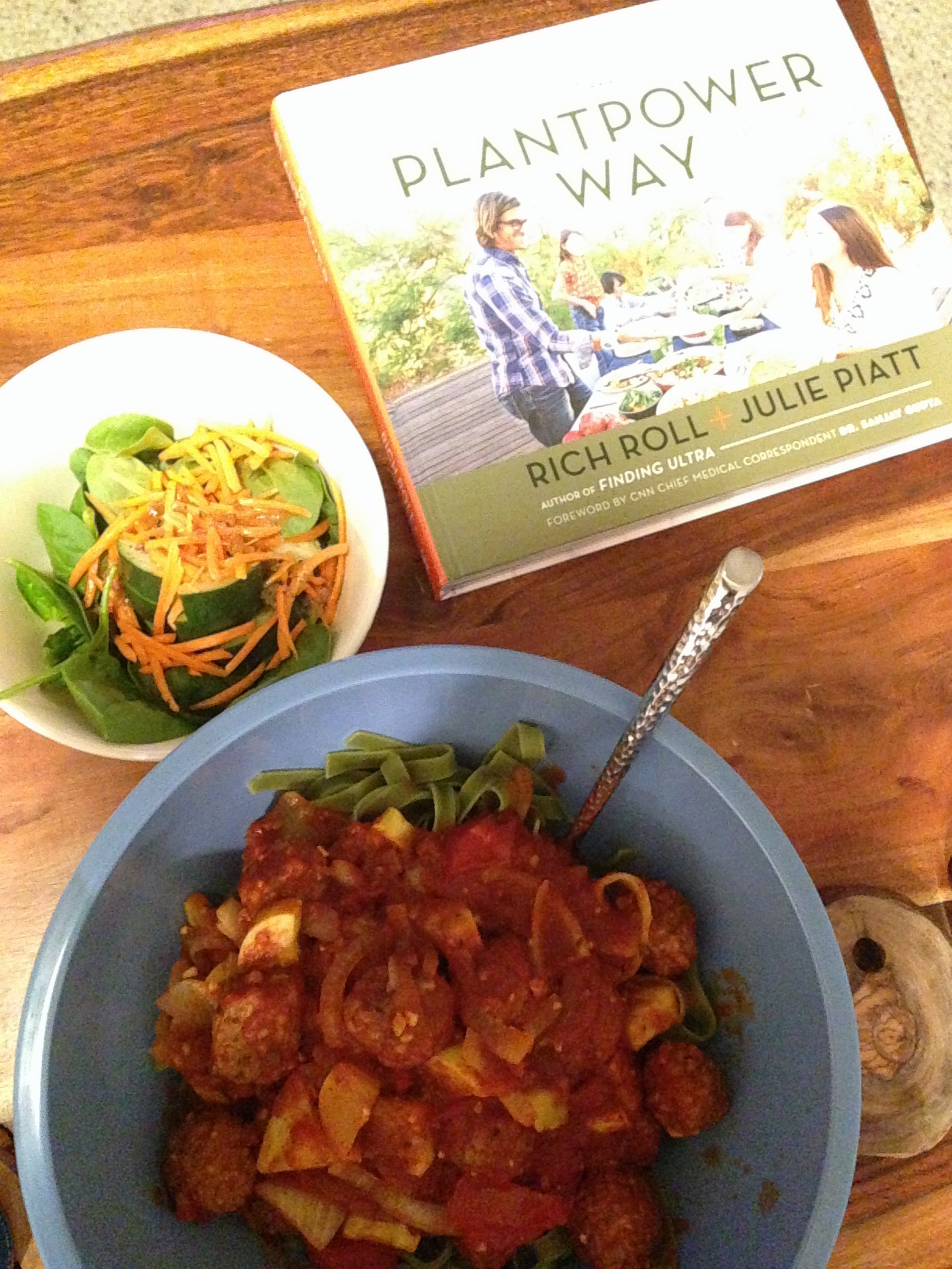
Those are meatless meatballs. Weird, but tasty. Shoutout to Jack Roach who sent us the intriguing read! Photo Courtesy: Annie Grevers
And this is where I must remind you, this was an experiment conducted by two amateur non-nutritionists. USOC nutritionist, Alicia Kendig, directed me to a book by Enette Larson (Ph.D., R.D., CSSD) called “Vegetarian Sports Nutrition.” Larson writes of the many benefits a vegetarian diet offers elite athletes. Larson is quick to remind readers that flexitarians (people who eat meat once in a while– we belong to this camp) will still reap the same benefits from eating primarily plants. One notable finding was that vegetarians typically can expend energy for longer durations due to their higher carb intake. The only supplement Kendig recommended for Matt was creatine, which is naturally found in animal proteins. Creatine increases protein synthesis by pulling water into your muscles (increasing the body’s ability to rapidly create energy) and is most helpful for explosive activities (i.e. 50 free, 100 back).
Yep, I was nervous when I Googled vegetarian athletes and saw only ultra-endurance athletes. Matt is a sprinter, and a mammoth man at 6’8, so he needs more mass than these ultra marathoners. But after leafing through former Stanford swimmer turned UltraMan extraordinaire Rich Roll‘s “Plantpower Way,” I was reassured by his list of vegetarian athletes:
Indianapolis Colts WR Griff Whalen
Oakland Raiders DT David Carter
Strongman Patrik Baboumian (He carried 1,200 pounds 10 meters…think about that…)
MMA/UFC fighters: Mac Danzig, Jake Shields, James Wilks
Boxer Timothy Bradley, Jr.
6. It Makes Cooking More Fun
I hated cooking. But since learning I can work magic by transforming vegetables that have long played a supporting role in dinner into the main event, I enjoy the process. It involves a lot of meditative chopping, and it feels good to know precisely what’s going onto your plate. Restaurant chefs aren’t necessarily determined to make your meal healthy– they’re determined to make your taste buds happy and will add all ingredients necessary to guarantee your money was well spent. Yes, it takes time and effort to make vegetarian dinners, but I rarely spend over 30 minutes in the kitchen. I used gatheredtable.com to help me save time with the meal planning.
Experimenting with this has educated us in many ways. Although we did not dodge meat for ethical reasons, we’ve learned a lot about the environmental effects of our Western carnivorous crazes. Knowing exactly what you’re ingesting seems like something we should have cared about long ago; back when we were begging our parents for Lunchables and Hostess cupcakes.
We are convinced of one thing: nourishing and fueling your body with ingredients found wholly in nature cannot be a bad thing.
Russ Ƙuryk even more elite swimmers are understanding how awesome plant-based can be! 🙂
The woman who won Richmond worlds road race is vegan too!
I’ve been vegan for a couple of years now. It’s awesome! I eat a wider variety of food than I ever did before going vegan.
Yee Ching Wong
But meat will fill you up a lot tho
Nice job with this Annie and Matt,
I conducted a similar experiment on myself too. Although it was a 2 part experiment. The first part was becoming “mostly-vegan” over a 4 year period where I continued to eat cheese, and a small amount of chicken, turkey, fish and eggs. I’d say I was about 85%-90% there. Over 5 years I shed about 25 lbs and substantially improved my blood tests (cholesterol, triglycerides, etc). Although my body had found a new, healthier set point, I was still about 12-15 lbs heavier than at my peak fitness (college years). I decided something was still not right. Through the help of some accomplished vegan-athlete sources I went “all-in” 100% vegan. I immediately started shedding fat again and the last 12-15 lbs came off over about a year with no loss of strength. I know this because I did DEXA scans at the start, 6 and 12 months later. My apparent “healthy” blood tests improved meaningfully as well. I thought I had been healthy but I was wrong – just healthier than as an omnnivore or flexitarian. While looking better and having improved blood measurements (i.e. health) is an excellent result and are reasons alone for making the change, I was concerned that my swimming would suffer. I dispelled that worry by breaking my own masters record in the 200 fly at the USMS Nats in San Antonio. I would encourage you both to keep it up, focus on continual improvement and spread the word. Carpe diem!
Smart lady! I think you learned a lot this summer! If we can get more swimmers — and more people in general — to live like you we could eliminate 80 percent of chronic disease. I went through a similar experience and today I eat mostly plants, a little fish and once in a while if I worked out hard during the day I might eat a little low fat Greek yogurt with nuts/berries. Keep sharing your story!
I almost never eat meat. And I feel like it’s a lot healthier for me then eating meat because I don’t really know where the meat is coming from