




















From Injury and Heartbreak to NCAA Champ:
Meghan McAninch’s USC Comeback
Honk! The final horn sounded.
California’s last push had come up short. USC players were already sprinting toward each other in the water at UC San Diego.
The 2026 NCAA Women’s Water Polo Championship belonged to The Women of Troy.
Meghan McAninch froze.
“I honestly didn’t know how to react,” McAninch said. “I didn’t plan ahead. We were in the water when the horn blew, and remember the girl that was guarding me kind of just started floating away. I was like, ‘Do I swim to my teammates?’”
This video shows McAninch splashing in the water after the final horn. She barely remembers it.
View this post on Instagram
“I swear I blacked out because I do not remember it at all,” she said.
The moment had been years in the making.
USC had just beaten Cal, 10-9, to win the NCAA women’s water polo championship.
Anna Reed delivered a monster game in goal.
Emily Ausmus helped lead the Trojans as a sophomore captain.
Casey Moon had his first national title as USC Head Coach.
McAninch had something else.
She had a comeback.
“Winning a national championship has been, besides going to USC water polo, my number one goal my entire life,” McAninch said. “Just hearing the buzzer go off and knowing that we finally did it, it was the most satisfying feeling in the entire world.”
Swimming World’s championship-game recap captured the final score, Reed’s saves and the Trojans’ late stand against Cal.
McAninch’s story starts before the final.
It starts with two years of NCAA pain. Then moves through Brazil, Team USA, a torn MCL, a ruptured eardrum, a dislocated knee, months of rehab and the strange place an injured athlete finds herself when the game she loves is suddenly taken away.
How did it end? With a national championship.
Two Years of Almost
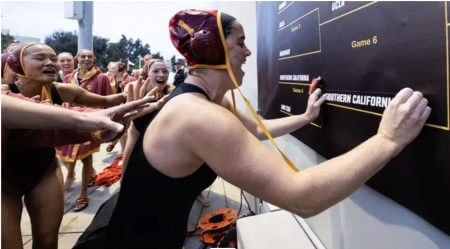
Moving up to the Final Bracket
USC’s climb did not begin at UC San Diego.
As a freshman, McAninch was part of a USC team that lost to Stanford in the NCAA quarterfinals. One year later, the Trojans got all the way to the final in Indianapolis. Stanford beat USC again, this time with the national championship on the line.
That one stayed with her.
McAninch still has not watched the game.
“I will not be doing that ever in my entire life,” she said. “It’s just so painful.”
Pain became fuel.
The Trojans talked about the national title every day, but McAninch said the conversation rarely centered on one opponent.
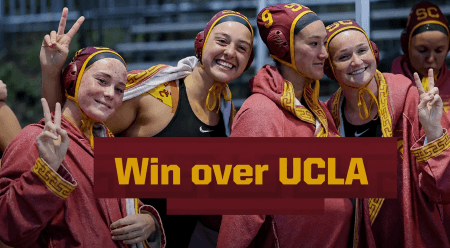
“We would talk about winning a national championship every single day,” McAninch said. “But it was never really about who we were going to play. It was more about us and what we were going to do and our mindset to make it to that last Sunday of play.”
A year earlier, the Trojans had learned what it felt like to stand one game from the title and leave without it.
“We didn’t really know the feeling of being in a national championship game,” McAninch said. “We didn’t know the feeling of being so close but getting it taken from you. That feeling of losing last year was really what fueled most of us.”
That lesson became part of the message to USC’s younger players.
“We were trying to relay that message to our freshmen all year,” McAninch said. “We’re going to take it from them. They’re not going to take it from us this year.”
The Hard Way Back
Before USC could finish its climb, McAninch had to get herself back in the water.
The hardest stretch came after playing for Team USA in Brazil. McAninch tore her MCL and ruptured her eardrum, then returned to school facing a long recovery. Just as she was supposed to come back from the MCL injury in her right knee, she fully dislocated her left knee.
“It was the worst feeling in the world. That was definitely a low for me this year.”
No athlete wants the season to pause like that. The team keeps practicing. Games keep coming. Roles keep evolving. The injured athlete is left trying to heal while also trying not to drift away from the group.
McAninch spent at least two hours a day in the training room, rebuilding strength and trying to get back.
“Rehab was a lot,” she said. “It was such a slow process.”
She credits USC’s staff, especially Sandy Olson, for helping her through it.
“The staff at USC is incredible,” McAninch said. “Sandy Olson literally saved my water polo career single-handedly.”
Her healing process taught something Meghan she might not have learned if everything had gone smoothly.
“When you want something, it’s not going to be immediate,” McAninch said. “It takes time.”
Then came the line that explains the emotional weight of the championship.
“I’ve always been passionate about water polo, and always knew that I loved it,” she said. “But never really knew how much until it was taken away from me.”
Leading From the Deck
 For the first month, McAninch could not get in the water.
So she found another way to help.
“I was just on the pool deck taking notes for the freshmen,” she said.
It might sound like a small contribution. Far from it.
USC plays its own system. Freshmen have to learn where to move, how to read situations, how the five-on-six and six-on-five should look and where the details matter. McAninch could not play, but she could still see the game. She could still help.
“I still felt included in the team,” McAninch said. “I still felt like I could help, even though I wasn’t in the pool.”
The injury gave younger players a different view of her. They saw McAninch not only as a player, but as someone who understood the system and cared enough to help them learn it.
“I think it helped them gain a lot of trust in me,” McAninch said, “because they could see I knew what I was talking about out of the water.”
One of the quieter characteristics of the comeback kid.
McAninch did not choose the injury. Now she needed to regroup. Time away from the water gave her a wider view of her team, a different connection with younger players and a deeper understanding of leadership.
Sometimes the athlete changes the role. Sometimes the role changes the athlete.
McAninch found a way to make her new role matter.
Two Comeback Stories
McAninch’s season was a comeback story.
So was USC’s.
The Trojans had talent. Plenty of speed. Players who could score, defend big moments. Yet early in the season, McAninch saw the team was not fully connected.
“We were having a lot of issues with our team culture at the start of the season,” she said. “We weren’t really playing the way that we usually would, which is for each other.”
Championship teams are not built only on talent. They are built on trust. USC had to rebuild some of that trust during this season.
“A lot of people just weren’t having fun,” McAninch said. “Which was such a bummer because we play water polo because it’s fun.”
So the players met without the coaches. A private meeting to hear each other out.
“It was the most productive meeting in the entire world,” McAninch said. “Everyone just kind of got everything they wanted to say off their chest.”
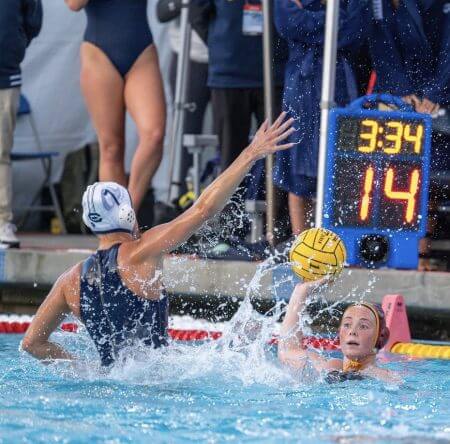
McAninch assist on goal with clock ticking down
USC hit a reset.
“After that, it was kind of like a clean slate,” she said.
A team trip to Hawaii helped the Trojans bond at just the right time.
“We went to Hawaii, and that was so helpful for us right after that meeting,” McAninch said. “It was kind of a restart.”
Soon after, USC found its rhythm.
“We beat Hawaii, Stanford, Cal, we beat UCLA,” McAninch said. “We came together in the perfect moment.”
This team did not simply arrive at the NCAA final loaded with elite skill. The Trojans arrived as a team that had gone through hard internal work, said what needed to be said and found each other again.
“Everyone’s talented, everyone’s a hard worker, everyone deserves to win a national championship,” McAninch said. “But for us, we earned it.”
Coach Casey Moon gave the players room to own that process.
“I think he gave us a lot more freedom this year to run the team ourselves,” McAninch said. “Which was awesome.”
That freedom did not mean USC lacked structure. It meant the players had ownership inside the structure.
Playing Free and Staying Loose
After USC beat Cal, Moon talked about a young team that stayed loose. The Trojans brought a stereo to the pool deck. They danced. Laughed. Flashed big smiles. Played with joy.
It was right there on display. A culture USC had fought to create.
McAninch said the team made a conscious decision to have fun again, recognizing that playing tight had already cost them enough.
“We all just decided, why? We’re just going to have fun,” McAninch said. “Who cares about the scoreboard at the end of the day? Let’s just make this season fun so we can remember it as the best season of our lives no matter what.”
Fun does not mean careless. Joy does not mean soft. Playing free does not mean playing without discipline.
McAninch had to learn that herself.
“I used to get super, super nervous before games and during games,” she said.
So she found small ways to break the pressure. Before games, she would look at teammate Rachel Gazzaniga and say something random, anything that had nothing to do with water polo.
“It kind of kicked us out of the serious, angry water polo mindset and grounded us a little,” McAninch said.
A minute detail says a lot about USC’s season.
The Women of Troy did not ignore pressure. They learned how to release it.
“There was a fine line between goofy and not being serious, and having fun playing with joy,” McAninch said. “I think we rode that line really well.”
Emily Ausmus said after the game that she reminded teammates to smile, play for each other and play water polo. Anna Reed said USC smiled after scoring and even after getting scored on.
In a one-goal national championship game, that kind of attitude makes all the difference.
USC did not smile because the moment was easy.
USC smiled because the Trojans had trained themselves not to let the moment take them away from who they were.
Playing to Win
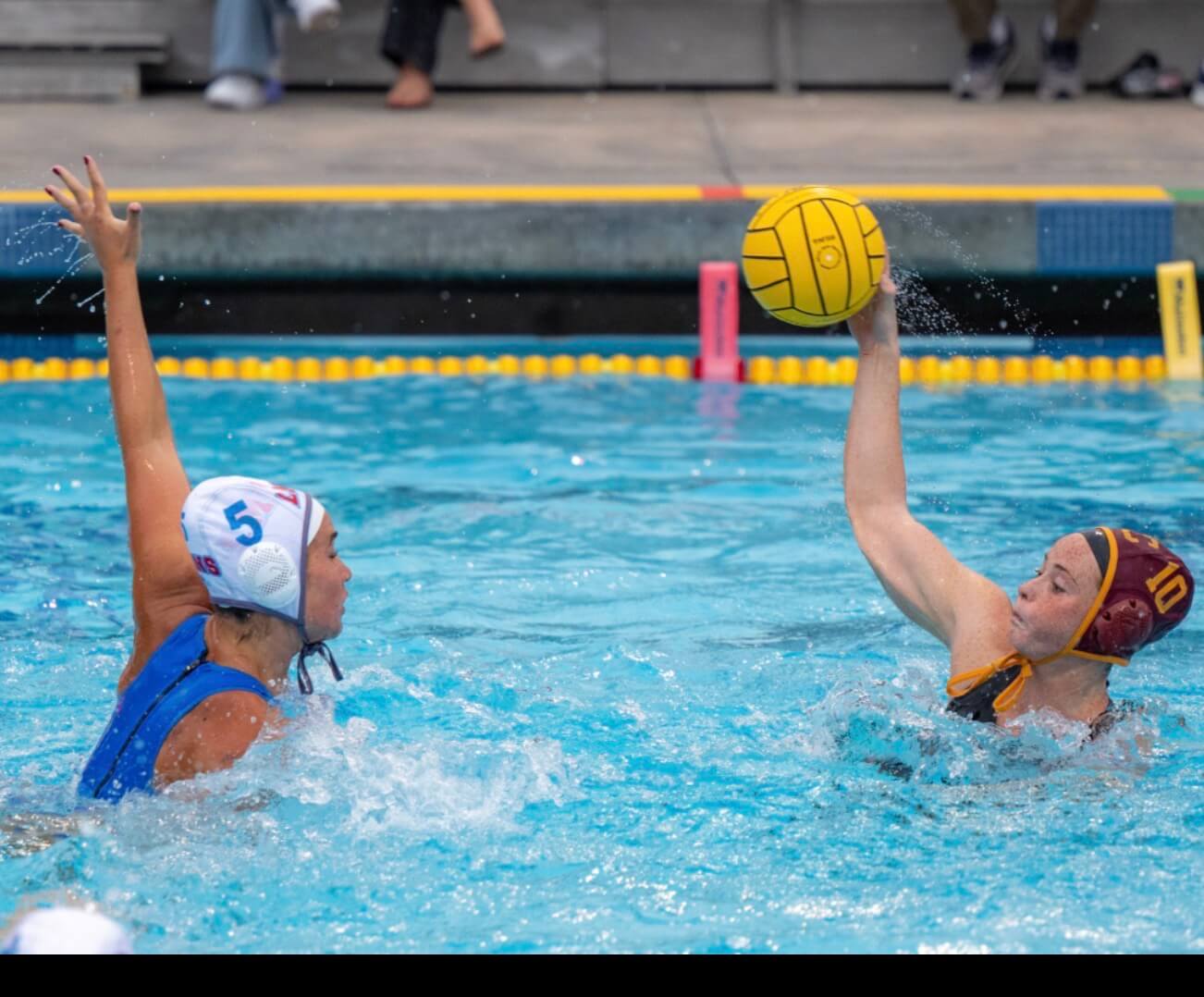
Meghan McAninch fires a go ahead goal early in NCAA Tournament
Like many championship games, this one was not perfect. McAninch did not pretend otherwise.
“Honestly, it was a really bad game for us,” she said. “Anna played amazing. As a team, we did not play very well.”
Cal made USC uncomfortable. The Golden Bears had already knocked off Stanford. USC, like a lot of people, had not expected Cal to be waiting in the final.
“We were jaws on the floor when we heard about the other games,” McAninch said. “We didn’t scout Cal at all for the final.”
Coach Moon and his team had to trust their preparation, work their system, and a rebuilt culture.
“In a championship like that, neither team plays their best game,” McAninch said. “We talked about being the team that makes the least mistakes, and that was the team that was going to win.”
McAninch scored one of USC’s key goals in the final. She remembers the feeling more than the details.
“I remember getting the ball and being like, ‘All right, let’s just do it,’” she said. “There were really no other thoughts.”
Last year, USC had reached the final and tightened. This year, the Trojans attacked the moment.
“In our final last year, we played not to lose,” McAninch said. “This year, we played to win. That was the big shift.”
Playing not to lose makes everything smaller. Playing to win opens the game back up. USC had felt both sides of that difference.
This time, the Trojans went after it.
“It was all or nothing,” McAninch said. “We’re just going for it.”
Fastest Team in the Nation
McAninch believes the Trojans’ speed helped separate them.
“I think we’re the fastest team in the nation,” she said. “We move really well up and down the pool.”
Speed fits the way women’s water polo is evolving. Newer rules have opened the game, created more attacking space and led to higher-scoring games.
“You can tell based on the scores now in water polo games,” McAninch said. “They’re so much higher scoring than they have been in the past because of these new rules.”
USC was built for that version of the sport.
Faster swimmers. Ready to move. Attack. Play fast in transition without losing connection.
Women’s water polo is faster, sharper and more dynamic than ever. USC’s championship run showed exactly why.
A Family Dynamic
When McAninch finally saw her parents after the game, the tears came quickly.
Of course they did.
They had been there for swimming, water polo, USC, Team USA, Brazil, the injuries, the rehab, the frustration and the comeback.
“Getting to celebrate with them was so special because they won that just as much as I did,” McAninch said. “They were on that team with me too, and they were on that journey with me too.”
That is how families experience sports.
Not in the pool, but in the journey.
“They’ve always supported me in chasing my dreams,” McAninch said. “This literally was one of my biggest dreams of my entire life, to win a national championship. They know how much work goes into it.”
Tears were not only about the title. They were about everything behind it.
“I have such a supportive family, and I’m so lucky that I have them,” McAninch said. “They have been so, so amazing to me.”
A Lesson Beyond Water Polo
A national championship can make everything look clean from the outside.
USC beat Cal, 10-9. The Trojans celebrated. McAninch sprinted to her teammates. Instant memories were made. Photos were taken. The NCAA Championship Trophy was lifted.
Yet the underlying victories were deeper, and in mysterious ways much richer.
McAninch had to lose water polo for awhile to understand how much she loved it. USC had to lose a final to understand themselves better. To work through injuries, pressure, hard conversations, culture issues and the weight of last year’s disappointment before they could arrive at UC San Diego ready for the moment.
McAninch’s lesson was not complicated, but it was clearly earned.
When something matters, it may not come right away. Healing takes time. Leadership can happen from the pool deck. Trust can grow during the hard parts. Playing free does not mean playing soft. Joy can be part of the experience.
For USC, the breakthrough came when the Trojans stopped protecting the dream and started attacking it.
“In our final last year, we played not to lose,” McAninch said. “This year, we played to win. That was the big shift.”
A lesson that applies beyond water polo.
In sports, work, relationships and life, people often get so close to something they want that they start guarding against losing it. The better answer is usually the harder one: reset, trust the people around you, remember why you started and go after it.
USC did that.
McAninch did that.
By the time the horn sounded, she did not have a speech ready. She did not have the perfect reaction planned. She barely had words.
Just the moment.
Her teammates.
A surreal feeling of coming all the way back.
USC had climbed the final step.
So too had Meghan McAninch.