





Great Innovation of 2020: When Alaskan Club Utilized Lane Shields to Fight COVID-19
When Northern Lights Swim Club plotted a path back to the water during the COVID-19 pandemic, it didn’t have to look far for resources.
Meet director Jodi McLaughlin surveyed the membership of the club, based out of the University of Alaska Anchorage, and found most of the experts she needed: Doctors, lawyers, experts in health and safety. And when that committee they assembled put forth its recommendation for a solution requiring an engineer, McLaughlin needed to look only as far as her husband, Sean.
“We wanted to be really proactive with our government here because our cases are low,” Jodi, who also serves as Alaska Swimming LSC’s secretary, told Swimming World Monday. “We wanted to show them that we took it seriously and wanted to get back in the water safely. We asked our coaches to establish a committee and they did. In some of their brainstorming, they proposed a shield idea, and I knew that my husband is an engineer and he’d be able to execute it.”
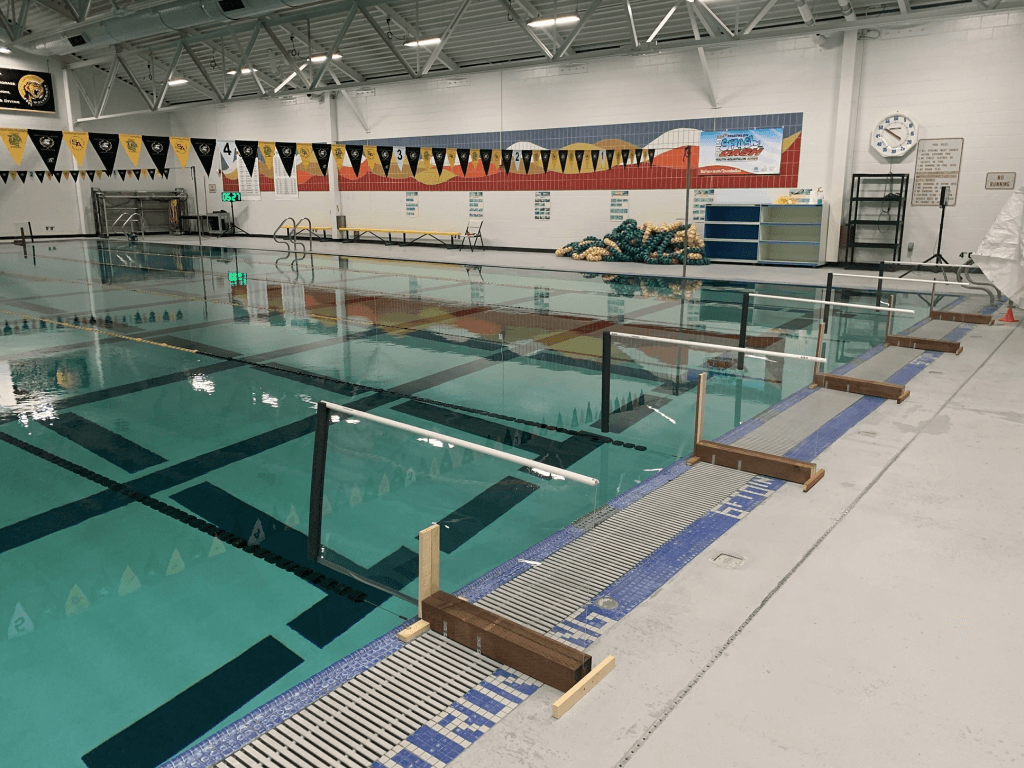
After a run to the hardware store and a weekend tooling in the garage, the club is implementing an elegant solution: Plexiglas shields at the end of each lane, a social-distancing aid that will help Northern Lights and other Alaskan clubs get in the water this week.
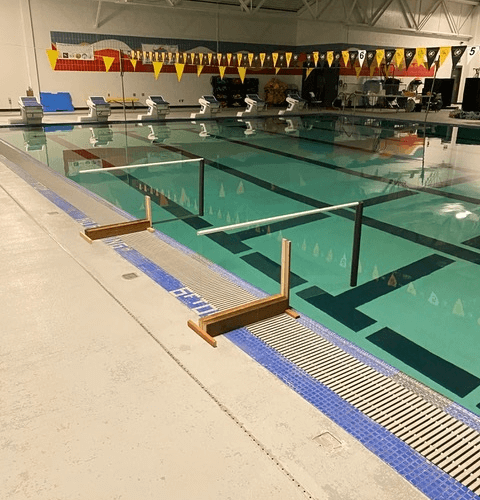
Photo Courtesy: Northern Lights Swim Club
The shields are simple in design, costing about $45 each. They sit over the lane lines at either end of Northern Lights’ six-lane pool, providing a barrier between swimmers stopped at the wall to reduce the exchange of respiratory droplets. The center of mass hovers over the wooden L-shaped anchor on deck, stabilizing the four-foot-by-two-foot shield. A foam bumper lessens the sting of a wide arm swing into the edge. And the clear glass allows swimmers to see each other and feel united even from behind an extra layer of social distancing.
While the Centers for Disease Control and Prevention (CDC) have found no evidence that COVID-19 is transmitted through properly treated water, one area of vulnerability at pools and aquatic facilities is, presumably, when swimmers stop at the wall and breathe, particularly when doing so heavily mid-workout. Instead of exhaling underwater, the lane shields maintain a physical barrier.
The solution is uniquely Alaskan in its execution, a product of what Jodi calls a “do-it-yourself mindset.”
“It’s all local stuff that we can put together in the garage, get them on deck and get kids in the water,” said Sean McLaughlin, who is also a USA Swimming meet referee.
Between the new procedures and the lane shields, it’s a lot of change. But it’s worth it to get kids back in the water, the McLaughlins believe.
“Coaches understand it’s a lot of work getting the kids back in the water,” Sean said. “But it’s about getting the kids back in the water. The coaches are super excited and the kids are super excited. And I think with the barriers put in place, the shields, I think we’re in the water weeks ahead of where we would be without them.”