



















Can Anyone Close the Gap on Leon Marchand in 400 IM?
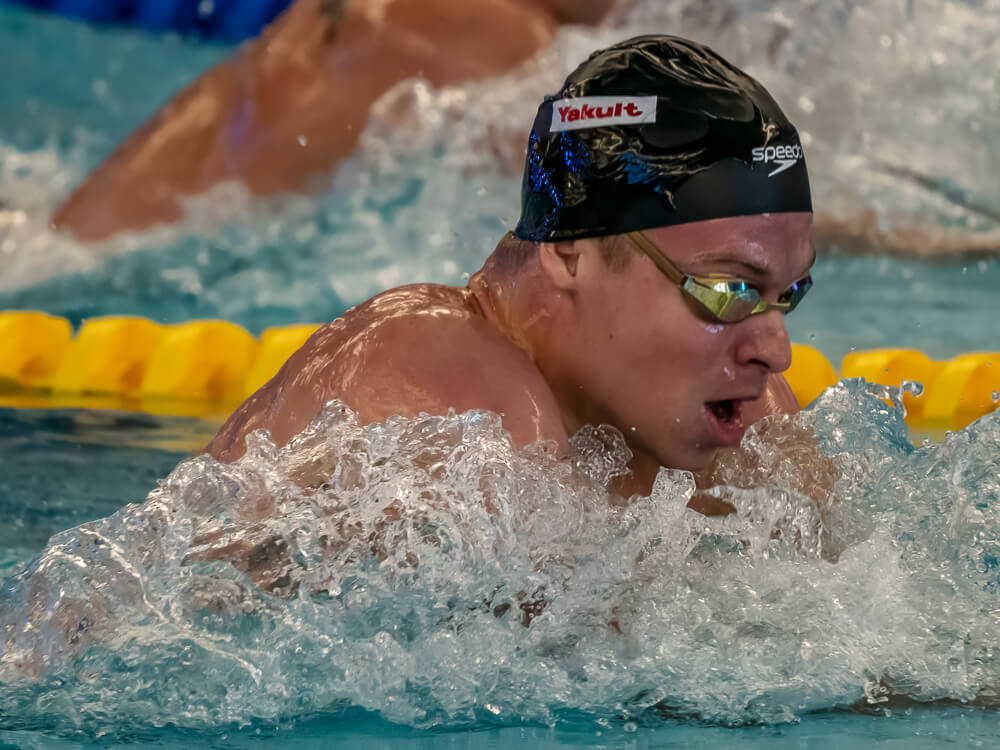
For the last four years, Leon Marchand of France has dominated rivals around the world in the individual medley events. Those races were part of his historic four-gold-medal sweep at the Paris Olympics, and he swept world titles in the 200 and 400 IM in 2022, 2023 and 2025. He has tracked down a pair of long-lasting medley world records, breaking the mark held by Michael Phelps in the 400 IM in 2023 and the Ryan Lochte 200 IM standard last year, by more than a second on both occasions.
Marchand has had to overcome some challenges in the 200-meter race: in the Paris Olympic final, Great Britain’s Duncan Scott stayed within a second, and American Shaine Casas put a scare into Marchand at last year’s Worlds. Casas, who trains alongside Marchand at the University of Texas, stayed within tenths of the Frenchman on each stroke and even out-split Marchand on the freestyle leg on the way to a time of 1:54.30, becoming the fourth-fastest swimmer in history.
The 400 IM, however, presents a much different picture. When Marchand won his first world title in 2022, he trailed American Carson Foster by a half-second midway through the race before deploying his now-famous breaststroke skills to pull away. Since then, he has swum every race with a massive gap back to the rest of the world, with few modern rivals able to make serious inroads on the all-time rankings.
That night in Budapest, Marchand swam a time of 4:04.28, then the second-quickest performance in history, with Foster taking second in 4:06.56, good enough to become the No. 8 performer on the all-time list. One year later, behind Marchand’s world-record-smashing performance of 4:02.50, Foster again grabbed silver with an identical time. After that day, more than two-and-a-half years would pass before any swimmer aside from Marchand swam under 4:07.
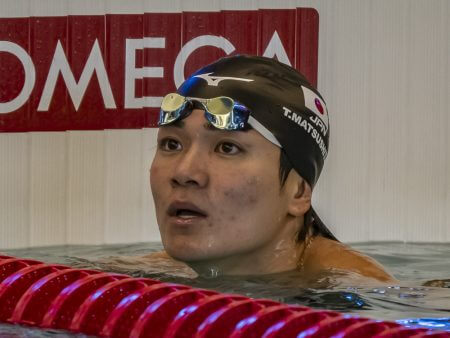
Tomoyuki Matsushita is the Olympic silver medalist and ninth-fastest swimmer ever in the 400 IM — Photo Courtesy: Peter H. Bick
Marchand won gold by 5.62 seconds in Paris and 3.59 at the 2025 Worlds, and he continues to excel, most recently going 4:04.56 at the French Championships. Japan’s Tomoyuki Matushita placed second at both recent major meets with times in 4:08-territory. A mark of 4:09.16 was sufficient to place Ilia Borodin on the podium last summer in Singapore.
That’s a long way off the times recorded throughout the mid-2010s, let alone Phelps and Lochte’s best marks, all of which would still easily earn spots on international podiums. Phelps held the world record of 4:03.84 from 2008 through 2023, while Lochte won gold at the London Olympics in 4:05.18. Chase Kalisz, a frequent 400 IM medalist from 2013 through 2022 and the Tokyo Olympic winner, topped out at 4:05.90 on his way to a world title in 2017. The Japanese duo of Kosuke Hagino and Daiya Seto consistently delivered hardware in the event, with Hagino topping out at 4:06.05 (2016) and Seto going 4:06.09 (2020).
When will swimmers begin to catch up? The best hope for a breakthrough in this event might come from the same Japanese system that previously accounted for an Olympic gold medal and three world titles last decade. Matsushita leads the way, having improved his best time of 4:06.93 at the Japan Swim in March. That performance positioned Matsushita to take a run at Hagino’s Asian record at this summer’s major meets, the Pan Pacific Championships in August and Asian Games in September.
Additionally, Japan’s Asaki Nishikawa clocked 4:07.67 last November while teenager Yumeki Kojima recorded a world junior record of 4:08.84 in the same race as Matsushita’s breakthrough. Raito Numata and Riku Yamaguchi also sit among the top-10 swimmers in the world this year. That sets up a potentially tough task of simply qualifying to represent Japan in this event at major international competitions in the coming years.
The United States always has strong options in the 400 IM, and Foster remains the standard-bearer. His record includes a pair of World Championships silvers and Olympic bronze. An ankle injury forced Foster to scratch the event at the 2025 global meet, but he rebounded to swim a time of 4:07.02 in December, his best in more than two-and-a-half years. The only other active swimmer to break 4:08 is Bobby Finke, the distance freestyle star who went 4:07.46 last June to run down Foster for an upset win at U.S. Nationals. However, Finke has never raced this event internationally as the distance events remain his priority.
Two veterans still competing have best times in the 4:08-range, Brazil’s Lewis Clareburt and Great Britain’s Max Litchfield. Both have been competing for these titles for years without any major breakthrough, with the now-31-year-old Litchfield placing a heartbreaking fourth in three consecutive Olympic finals. Borodin and Italy’s Alberto Razzetti are younger, but neither has ever gotten under 4:09.
Even though Marchand has revolutionized the speed of this event, no one has followed him up the all-time standings. Simply record a 4:08-mid, the time Phelps first achieved 18 years ago, and a swimmer is essentially assured a spot on the podium. Can any of these swimmers, perhaps Foster, Matsushita or one of his Japanese teammates, make the jump? A 4:05 would be a welcome sight, although still a long way back of Marchand.