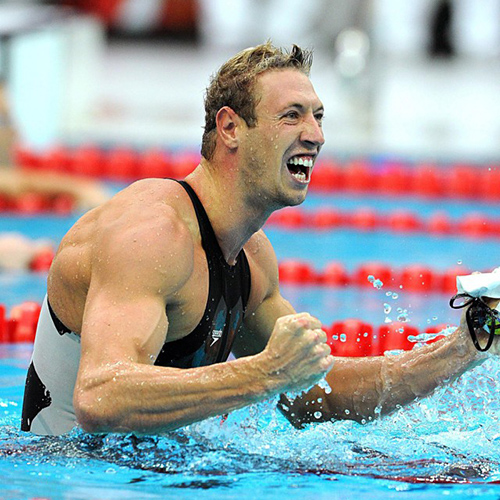
 |
Alain Bernard - Swimmer Born in Aubagne, Bouches-du-Rhône, France, Alain Bernard trained at a local club until the age of 16, when he switched to Club Marseille to train under coach Denis Auguin. He made slow but steady progress until 2007, a break-out year in which he set the French record in the 100m freestyle and later claimed his first European Championship title in the same event. Then, at the European Championships in March 2008, he set his first world records, winning the 50m and 100m freestyle. A month later he qualified for the Beijing Olympic Games in both events. |
|
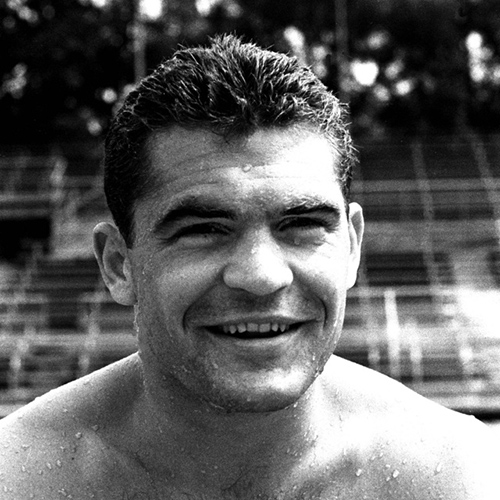 |
Andras Bodnar - Water Polo Player Hungary is a land of thermal springs and although landlocked, swimming and water sports are ingrained in their culture. This love of water led to an early domination of international swimming and diving competitions in the late 19th and early 20th century. In the 1920s, it was water polo that came to symbolize Hungary’s unique strengths and individuality. |
|
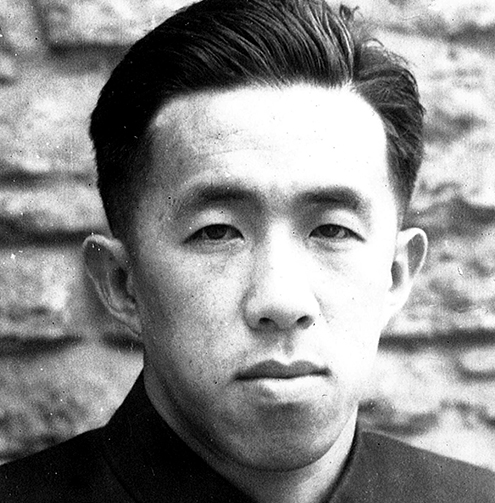 |
Wu Chuanyu - Pioneer The son of second-generation Chinese immigrants, from Fujian Province in southern China, Wu Chuanyu was born in Central Java, the Dutch East Indies, in 1928. Swimming came naturally to him and his friends, as the weather was hot, and there were wide rivers and a large pool near his home. Like many young boys his age around the world, he was inspired to become a champion swimmer by watching Tarzan movies, starring the American swimming sensation, Johnny Weissmuller. |
|
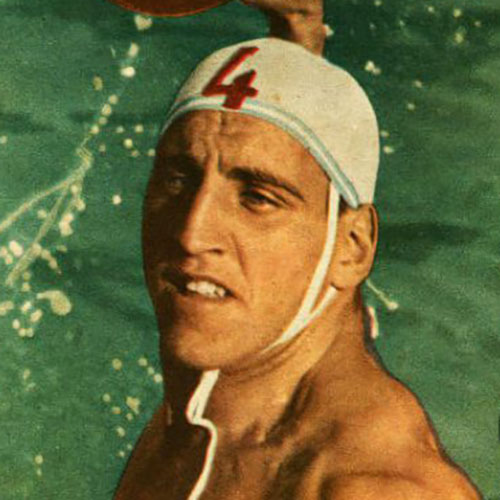 |
Osvaldo Codaro - Water Polo Player In the late 1920s, the European continent was in a depression and while communist and fascist factions were fighting for power in Spain, Argentina became an oasis of prosperity and peace, and the preeminent center of Spanish culture and sport. Swimming was particularly popular after Alberto Zorilla won Olympic gold in 1928. This was the condition in Argentina when Osvaldo Horacio Codaro was born on December 9, 1930, in the Avellaneda district of Buenos Aires. |
|
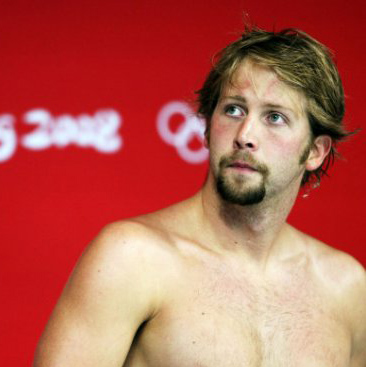 |
Ian Crocker - Swimmer When 17-year old Ian Crocker entered the 2000 US Olympic Trials, it was with a view to gain experience for 2004, but he left the meet winning the 100m butterfly. Then, at the Olympic Games in Sydney, he won a gold medal as a member of the USA’s world record breaking 4x100m medley relay team. |
|
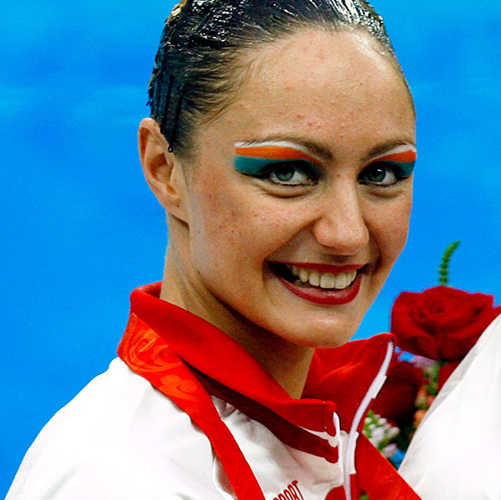 |
Anastasia Davydova - Synchronized (Artistic) Swimmer Her first sport was figure skating. Then she saw rhythmic gymnastics on TV and she left the ice for the ribbon and mat, but not for long. At the age of six, her mother took her for swim lessons where she was exposed to synchronized swimming. She immediately loved the sport. Early on in her career, she was tested by her coach to see if she was really serious about synchronized swimming. She was asked to give up her favorite foods of chocolate, cakes and chips. She loved the sport more, gave the foods up and the rest, as they say, is history. |
|
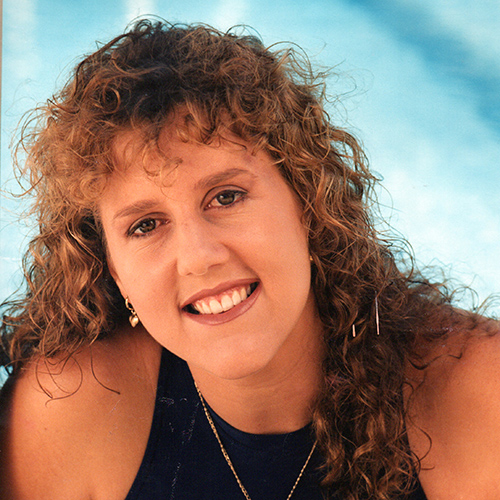 |
Bridgette Gusterson - Water Polo Player Growing up in Perth, Western Australia this young lady had a clear and precise goal: She wanted to be an Olympian. The only problem was, she didn’t have a sport. Her first choice was gymnastics but she knew she was going to be too tall. The Bicton pool was just two minutes from her home and her older sister, Danielle, played water polo, so the choice became clear. Even though women’s water polo was not yet on the Olympic program, there were hopes it would be added to the 1984 Olympics in Los Angeles. So she began a career that set the standard for female water polo players around the world. |
|
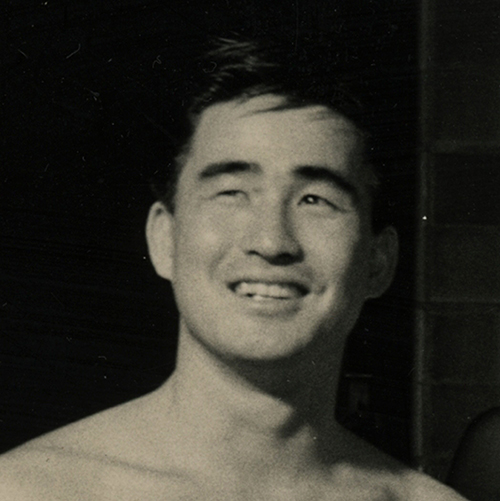 |
Takeshi Hirose - Pioneer He learned to swim in the irrigation ditches of Maui’s Pu’unene’s sugar plantation, where his parents worked as laborers. Watching over him and the other kids was Soichi Sakamoto, one of their elementary school teachers. |
|
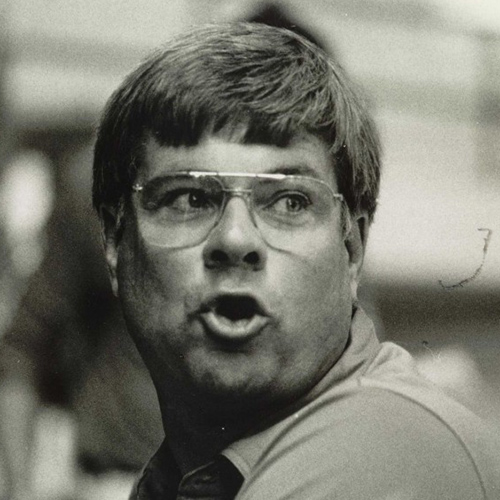 |
Richard Jochums - Coach Dick’s journey to the Swimming Hall of Fame began when his mother insisted he learn to swim. His first swim teacher and coach was Laurabelle Bookstaver, of the Berkeley Women’s City Club. Under the tutelage of this tough talking woman, Dick fell in love with the sport. He earned a scholarship to the University of Washington where John Tallman turned him into an All-American sprinter and took him on as his assistant. Leaving Washington to continue his studies at Cal, he joined Pete Cutino’s staff as his assistant. Over the years he had studied the methods of George Haines, Sherm Chavoor, Peter Daland and Jim Counsilman and after receiving his Ph. D., accepted the coaching and teaching position at UC Hayward. It was at Hayward where Dr. Robert Morford led him to discover the ancient Greek concept of Agon and Areté - the struggle and the victory. |
|
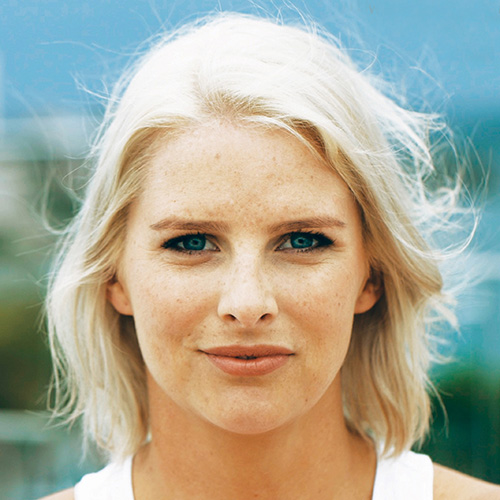 |
Leisel Jones - Swimmer She first learned to swim in her backyard pool in Katherine, Northern Territories. As a ten-year old Brisbane school girl, she watched Samantha Riley win the bronze medal in the 100m breaststroke at the 1996 Olympic Games in Atlanta. Less than four years later, she ousted her idol from the Australian Team by winning the 100m breaststroke at the 2000 Australian Olympic trials at the age of 14. Shortly after her fifteenth birthday, she swam the race of her life to claim the silver medal in the 100m breaststroke and added another silver in the 4x100m medley relay at the Sydney Olympic Games. |
|
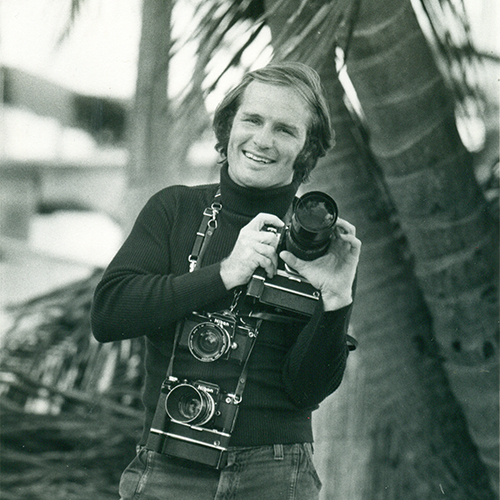 |
Heinz Kluetmeier - Contributor Heinz Kluetmeier was born and raised in Germany until he was nine, when his family moved to Milwaukee, Wisconsin. He was introduced to the idea of a career in photo journalism when several photos taken of him by his mother, with his multi-talented pet parakeet “Chirpy,” were picked up and published nationally by the Associated Press. By age 15, he was shooting pictures for the local AP office. |
|
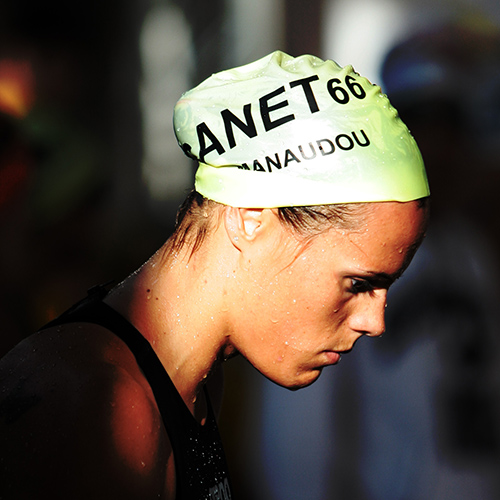 |
Laure Manadou - Swimmer Laure Manaudou was born on October 9, 1986 in Villeurbanne, France. She swam for the club of Ambérieu-en-Bugey, in Ain, from the age of 6 to 14 years old. In 2000, coach Philippe Lucas spotted her and convinced her parents that he would make her a champion. She then left the family nest to join her new coach in Melun, and a year later she won two silver medals at the European Junior Championships in Malta. Everyone started talking about her enormous potential. |
|
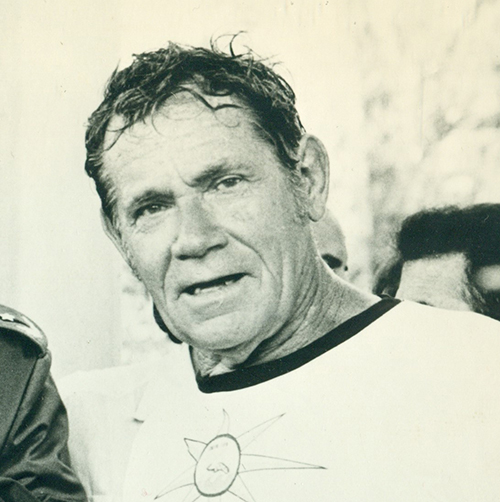 |
Walter Poenisch - Pioneer He was a baker, rodeo competitor and strongman who entered his first competitive swimming race in 1963, to show that a 50 year old man could be as active as young fellows. It was a 60-mile professional marathon swim in frigid Lake Michigan. While Walter Poenish failed to finish, he was hooked on the sport and left the water determined to swim an even greater distance for an even greater cause. |
|
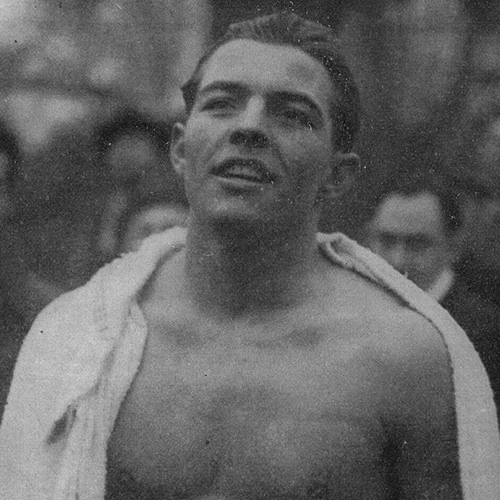 |
Georges Vallerey, Jr. - Pioneer In the early morning hours of the 8th of November, 1942, an armada of American destroyers, aircraft carriers and troop ships carrying 35,000 American soldiers approached the Moroccan coast under cover of darkness. Their mission was to destroy the French fleet guarding the port of Casablanca and occupy the city. The defending French warships were outgunned by the American fleet and as the battle ensued, several French vessels retreated into the harbor while under attack, hoping to avoid being sunk at sea. |
|
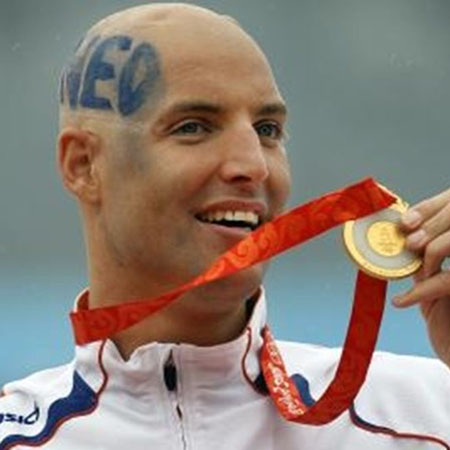 |
Maarten van der Weijden - Swimmer Born in Haastrecht, Netherlands on March 31, 1981, Maarteen van der Weijden, followed in his older sister Etta’s wake in the pool and open water. As a young boy, he liked challenges and at the age of 11 he swam 100x100m in training. From 1998 to 2000 he became a 12-time Dutch national champion at the 1500m freestyle, 400m freestyle, and 5km open water. Then, in 2001, he was diagnosed with acute leukemia and his chances for survival were very small. For the next two years, Maarten had little control over his life and he depended on the medical specialists to guide him through successful chemotherapy treatment and a stem cell transplantation. In 2003 he started to train again and amazingly qualified for the FINA Open Water World Championships in Barcelona. In 2004, he swam across the Ijsselmeer in 4:20.58hours, breaking the former record by almost 15 minutes to collect 50,000 Euros, which he donated for cancer research. Van der Weijden had his own website named “Maarten van der Weijden zwemt tegen kanker” (Maarten van der Weijden swims against cancer) where he informed his fans about his life and his career. He also collected more money to invest for cancer research. His dream was to become World Champion and over the next few years he trained hard and worked on his tactics. In 2008, he fulfilled this aim when he won the 25km at the World Championships in Seville. He also won a bronze medal in the 5km there and finished fourth at the 10km. This result qualified him for the first 10km open water marathon race at the 2008 Summer Olympics in Beijing. There he ended up winning the gold medal on August 21, narrowly edging out David Davies of Great Britain. He thus became the first mens’ Olympic Champion in the 10km open water competition. He announced the end of his professional swimming career during his acceptance speech as Dutch Sportsman of the year in 2008. But that’s not the end of his story. |
|
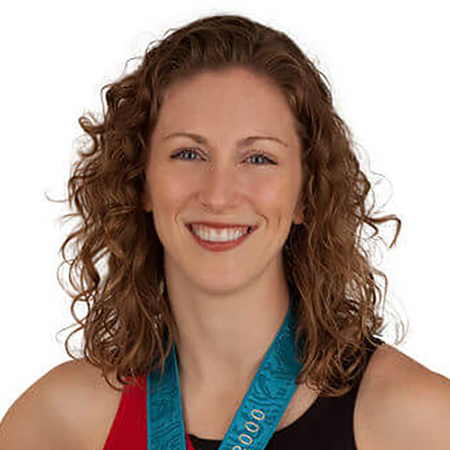 |
Laura Wilkinson - Diver Inspired by the publicity surrounding Romanian gymnastic guru Béla Károlyi’s arrival to her home town of Houston, Texas, in 1981, Laura Wilkinson fell in love with gymnastics and dreamed of being in the 1996 Olympic Games. After years of training her gymnastic career ended when a growth spurt made her too tall for the sport. Then she discovered diving. In spite of being told by one of her teachers that she was too old to start a new sport at the age of 15, Laura plunged in and “fell in love with the sport on the first day.” |
|
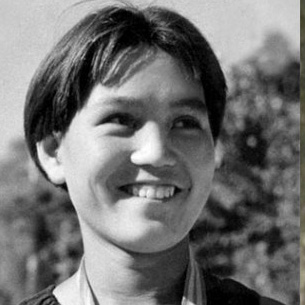 |
Zhang Xiuwei - Pioneer In 1958, when she was 14 years old, she knew nothing about diving and didn’t even know how to swim, but coaches saw something in Zhang Xiuwei that led them to select her for a beginning diving program in the city of Tianjin, China. Xiuwei progressed rapidly and a year later, training under coach Wu Chengxi, she was selected for the national training program in Beijing, with athletes from all over China. The program was overseen by Soviet diving experts and in 1960, Xiuwei won the national youth springboard championship at the age of 16. |
|